How to Build a Wormery Bedding System for Under £5 (UK Guide)
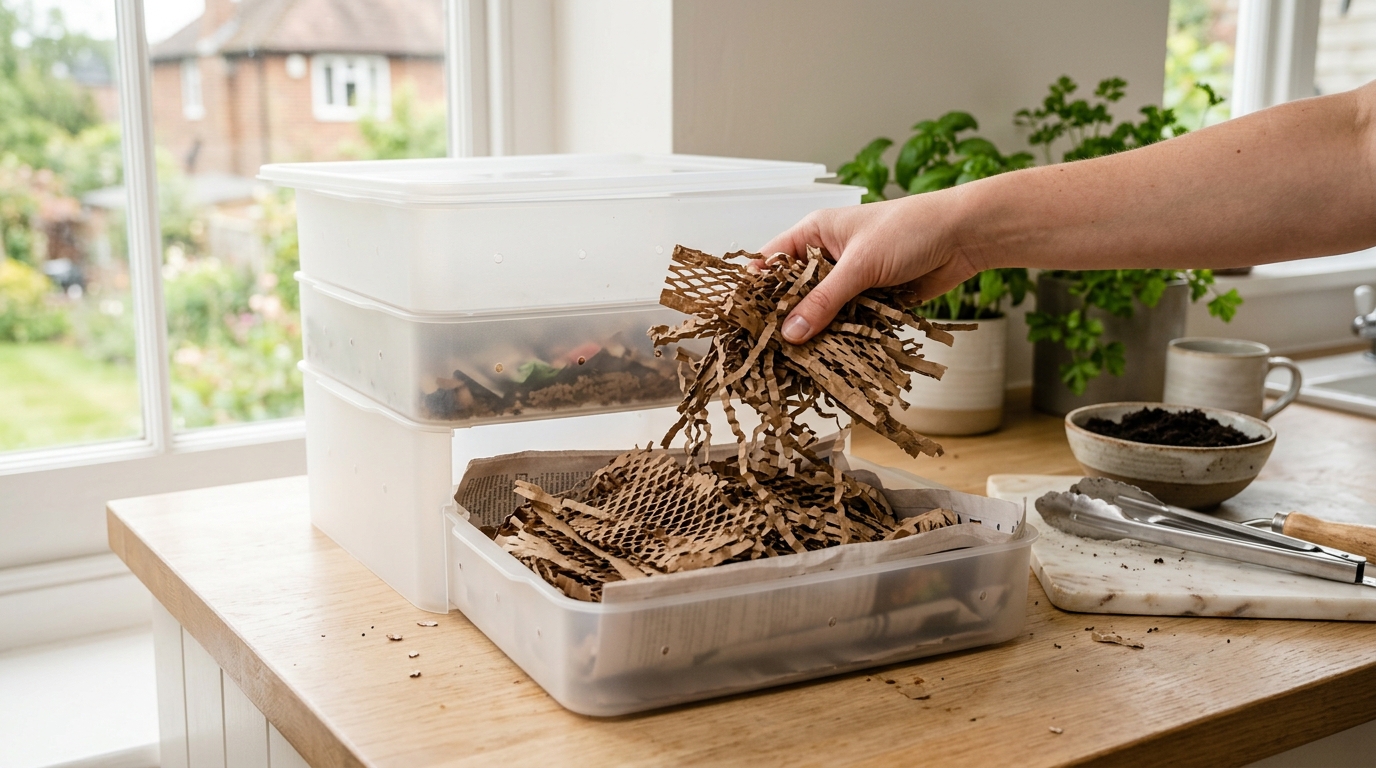
I bought my first wormery thinking the worms needed expensive, branded coir blocks to survive. They don’t. The worms in my Leamington Spa flat have been thriving for three years on nothing but shredded Tesco delivery boxes and last week’s Metro.
The “Must-Have” Materials: Cardboard and Paper
A healthy wormery rests on two simple things: a fluffy, aerated base and a moisture-retaining blanket. The core of any wormery bedding is shredded, uncoated cardboard for aeration and plain paper for moisture retention. Shred the cardboard into thin strips, fluff it up to create air pockets, and layer it with damp newspaper. This combination mimics a natural leaf litter environment, giving worms the oxygen and humidity they need without any costly commercial mixes.
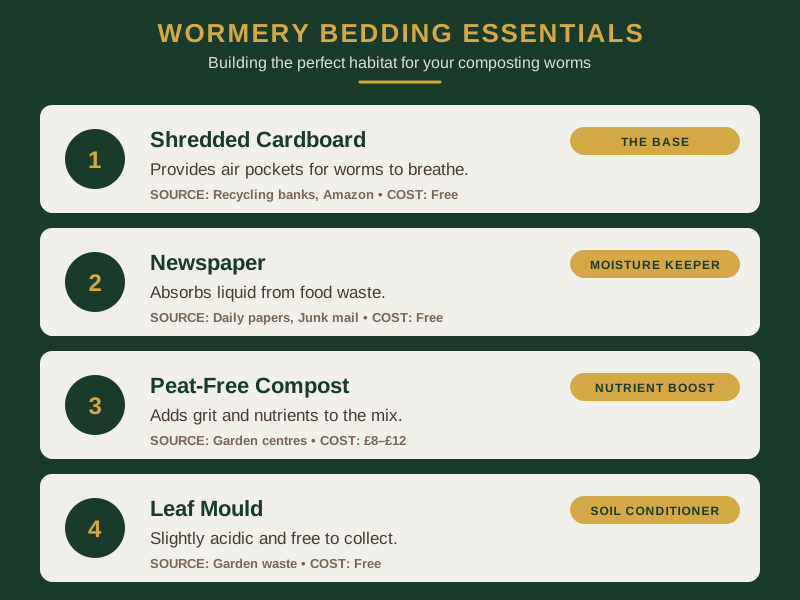
- Shredded Cardboard (The Base). Cardboard gives the worms the air pockets they need to breathe – think of it as a miniature forest floor. It’s lightweight, cheap and breaks down slowly, providing structure for months. Adding plenty of carbon-rich browns like cardboard is a rule of thumb backed by Garden Organic to balance out wet, nitrogen-heavy kitchen scraps.
- Newspaper and Junk Mail (The Moisture Keeper). Paper soaks up the liquid from your food waste, keeping the bedding damp but not soggy.
UK Sourcing – I collect my free cardboard from the recycling banks at Tesco and Sainsbury’s (they accept clean boxes and give you a bin to drop them off). Local council recycling centres also take cardboard, and Amazon delivery boxes are a goldmine if you ask the driver to leave them at the back door. For paper, grab the daily newspaper, junk mail, or the plain white pages that come with your bills – all free and safe.
UK Sourcing: Yes or No?
| Material | Safe? | Notes |
|---|---|---|
| Amazon delivery boxes | Yes | Uncoated cardboard, tear to check |
| Tesco delivery boxes | Yes | Plain brown cardboard, remove tape |
| Glossy Tesco leaflets | No | Plastic-coated, toxic inks |
| Daily newspaper | Yes | Soy-based inks, safe for worms |
| Junk mail (matte) | Yes | Plain paper only |
| Junk mail (glossy) | No | Coated paper, slow to break down |
| Shredded bank statements | Maybe | Matte only; security paper is too thick |
| Pizza boxes (clean) | Yes | Uncoated, grease-free only |
How to Prep Cardboard Bedding (The “Fluffing” Protocol)
Tossing a flat slab of cardboard into the bin is a guaranteed way to suffocate your worms. It compacts, goes anaerobic, and stops airflow. Here is how to prep it properly:
Step 1: Shred the cardboard. Tear your uncoated boxes into thin strips, roughly 2-3 cm wide. You can use a heavy-duty paper shredder if you have one, but ripping it by hand works just as well. Step 2: Soak the strips. Dunk the cardboard in a bucket of water for about ten minutes. You want it completely saturated but not turning into mush. Step 3: Wring it out. Grab handfuls of the wet cardboard and squeeze. It needs to feel exactly like a wrung-out sponge. If water is freely dripping out, it is still too wet. Step 4: Fluff and layer. Pull the damp strips apart like you are fluffing a pillow. This creates a lattice of air pockets that lets oxygen flow through before you drop it into the wormery.
The “Nice-to-Haves”: Peat-Free Compost and Leaf Mould
If you’ve got a bit of spare cash or garden waste, these upgrades can boost worm activity, but they’re optional.
- Peat-Free Compost. A handful of peat-free compost adds nutrients, provides grit for the worms’ digestion, and improves texture. It’s a greener choice than peat, which is a finite resource. You can pick up a bag for roughly £8–£12 from Wilko or B&Q.
- Leaf Mould. Collect fallen leaves in autumn, shred them, and let them decompose for a few months. The Royal Horticultural Society champions leaf mould as a brilliant soil conditioner, and it is slightly acidic – perfect for worms and completely free if you have a garden.
- Coco Coir (the pricey alternative). Dried coconut fibre holds water well, but it’s the most expensive option (around £15 for a 5 kg block). Use it only if you struggle to keep the bedding damp in winter.
Peat-free matters: Peat bogs store more carbon than UK forests. The UK government has pledged to ban peat in compost by 2026. Using peat-free compost in your wormery isn’t just better for the worms — it aligns with UK environmental targets. Wilko, B&Q, and most garden centres now label peat-free bags clearly.
Budget vs. Premium – The cardboard-paper base does the job on its own. Adding peat-free compost or leaf mould gives a nutrient boost, while coir is a luxury for those who need extra water retention.
What to Avoid: The “Don’ts” of Worm Bedding
- Glossy Paper and Plastic-Coated Cardboard. Shiny magazines, cereal boxes with a waxy finish, and any plastic-laminated material contain inks and chemicals that are toxic to worms. When I first started (as you can read on my about page), I mucked it up by using a stack of glossy flyers and ended up with a dead patch of worms and a nasty odour – a classic “don’t do that” lesson.
- Chemicals and Dyes. Red or blue inks, coloured paper, and pressure-treated timber release substances that can kill the castings. Stick to plain white or brown paper.
- Meat, Dairy and Fish. These belong in a bokashi bucket, never in the wormery. They rot fast, smell, and attract flies.
- Citrus. A few orange peels are fine, but a lot of lemon or lime makes the bedding too acidic and stresses the worms.
Warning: Glossy paper may look harmless, but it can leach harmful chemicals and suffocate your worms. Always do the tear test: if a plastic film peels off when you rip it, bin it.
How Do You Manage Wormery Moisture in UK Weather?
You manage wormery moisture by adjusting the ratio of dry cardboard to damp paper based on the season. In winter, add dry cardboard to soak up excess dampness and insulate the bin; in summer, add damp newspaper to prevent the bedding from drying out. The bedding should always feel like a wrung-out sponge.
📺 Watch: July tour after a cool — Charles Dowding
- Summer Prep. British summers can be unexpectedly dry, especially in a flat where the air gets stuffy. Add extra shredded newspaper to soak up the water from food scraps and keep the bin from drying out.
- Winter Prep. The damp, chilly months mean cardboard can become soggy. Toss in a few more strips of dry cardboard to absorb excess moisture and keep the bin from getting too cold and wet.
The “Squeeze Test.” Grab a handful of bedding and squeeze. If water drips out, it’s too wet; if it crumbles into dust, it’s too dry. Adjust by adding paper (dry) or cardboard (wet) accordingly.
Seasonal Checklist
- Summer: 1 kg shredded newspaper, 0.5 kg cardboard, check daily for dryness.
- Winter: 1 kg cardboard, 0.3 kg newspaper, check weekly for sogginess.
UK Seasonal Moisture Calendar
| Month | Typical Challenge | Bedding Adjustment |
|---|---|---|
| Jan-Feb | Cold, damp air | Add 20% more dry cardboard; check weekly |
| Mar-Apr | Rising humidity | Maintain normal ratio; increase aeration |
| May-Jun | Warm, dry spells | Add damp newspaper; mist if needed |
| Jul-Aug | Hot, dry flats | Increase damp paper by 30%; check daily |
| Sep-Oct | Cooling down | Reduce damp paper; add dry cardboard |
| Nov-Dec | Wet, cold weather | Maximum cardboard; minimal paper |
Wormery Bedding Material Guide
| Material | Purpose | Source | Cost |
|---|---|---|---|
| Shredded Cardboard | Aeration and Structure | Recycling banks, Amazon | Free |
| Newspaper | Moisture Retention | Daily papers, Junk mail | Free |
| Peat-Free Compost | Nutrients and Grit | Garden centres | £8–£12 |
| Leaf Mould | Soil Conditioner | Garden waste | Free |
| Coco Coir | Water Retention | Garden centres | £15+ |
Keep Learning
You now have the full, zero-cost formula for a thriving wormery: shredded, uncoated cardboard for aeration, plain paper for moisture, and optional nutrient boosters if you’ve got the spare material. Remember the fluffing step, keep an eye on the “wrung-out sponge” moisture level, and steer clear of glossy or chemically treated paper.
Ready to set up your wormery with confidence? Make sure you have your bedding sorted before your worms arrive in the post, so you never have to guess or scramble at the last minute. You can find more of my beginner guides over on the blog.
If you’re still unsure about a specific paper type, hold it up to the light — if you can see through it, the worms can break it down. If it’s glossy or plastic-coated, bin it. Literally.
Related Guides
For a complete overview, see our How to Set Up a Wormery for the First Time UK.
Where I Learned This
Note: General guidance only. Always verify specific local regulations and material safety with a qualified professional or official source.