Best Bokashi Bin UK: Top Picks for Small Kitchens
As an Amazon Associate I earn from qualifying purchases. This page contains affiliate links — if you buy through them, I earn a small commission at no extra cost to you.
At £45 for a decent starter kit, a bokashi bin is cheaper than a year’s worth of council food-waste bags, but only if you pick one that actually fits your cupboard.
The wrong bin — too tall, too wide, or with a weak seal — turns a money-saving setup into a smelly faff. I have tested bins in three different flats, from a cramped Camden studio to a terraced house in Leamington Spa, and the difference between a bin you forget exists and one you want to throw out the window comes down to four practical checks. Here are the models that pass them.
What Is a Bokashi Bin and Why Do You Need One?
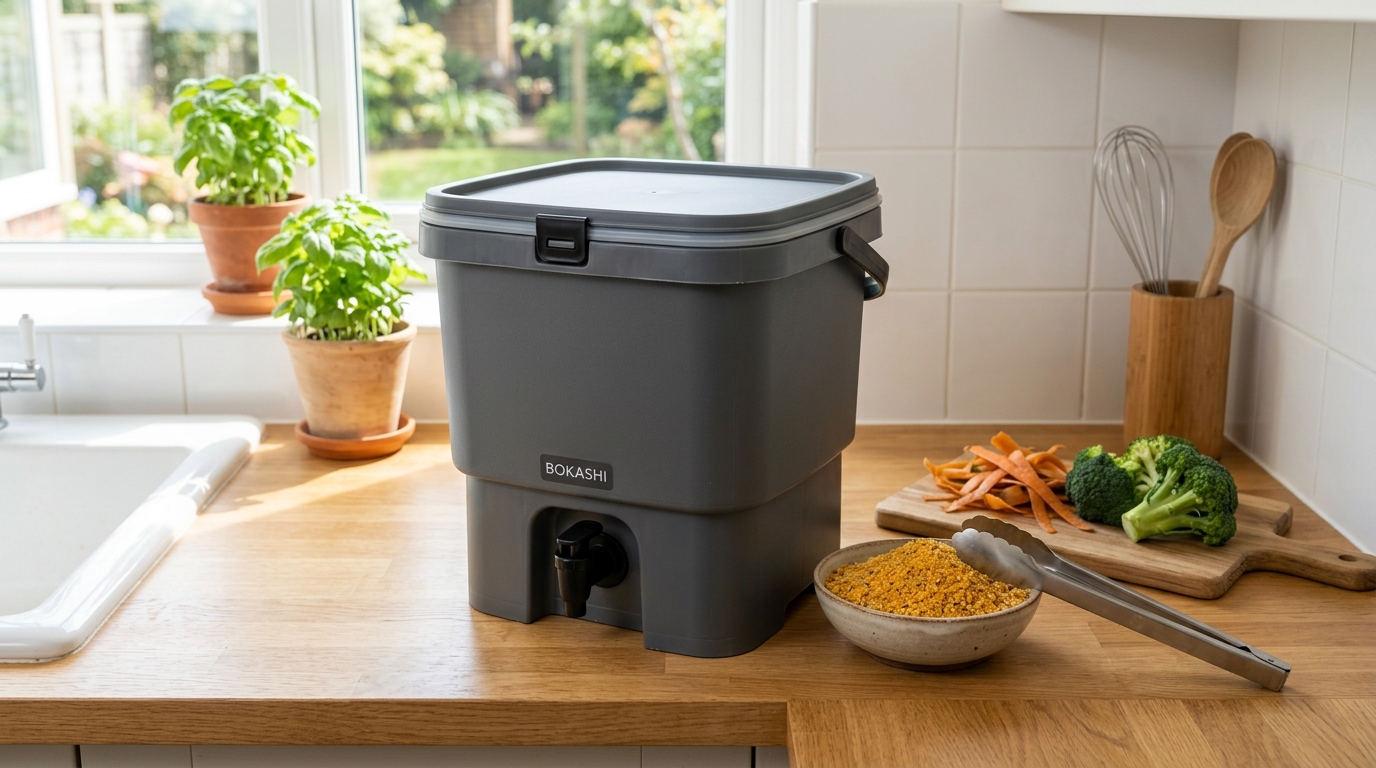
A bokashi bin is a sealed, airtight container that ferments kitchen waste using inoculated bran, rather than rotting it down aerobically. You layer food scraps with a handful of bokashi bran—a mix of wheat or rice bran inoculated with effective microorganisms—and the microbes turn the waste into a wet, pickled mass.
The biggest win for flat-living is that the bin stays anaerobic, meaning you avoid the rotting smell of a regular compost caddy. It also tolerates meat, fish, and dairy, which many wormeries reject outright. As Garden Organic points out, the highly acidic environment created by the fermentation process safely suppresses the pathogens that normally make rotting meat so hazardous. That means you can toss that leftover chicken curry or a slice of cheese straight in, with no need to scrape the meat out.
The catch? Bokashi only gives you “pre‑compost”. After about two weeks, the fermented waste still needs a final digestion step—either buried in a garden bed, added to a hot outdoor compost heap, or dropped into a wormery. Without that finishing stage, the pickled material never becomes true soil conditioner. If you want to explore how this fits into the wider picture, have a browse through my other guides on the blog.
The “Small Kitchen” Filter
When you’re hunting for a bin that won’t dominate a 3‑square‑metre kitchen, focus on four practical criteria to avoid wasting your money.
- Lid seal – A tight, rubber‑gasket lid is non‑negotiable. A weak seal lets oxygen in, turning the pleasant fermentation into an unpleasant rot. In my first flat experiment, the lid popped open every night and I woke up to a full‑on fishy stink.
- Drainage system – Look for a built‑in spigot or a removable tray that catches the bokashi “tea”. Without a proper drain, you’ll end up with puddles on the kitchen floor, a classic faff that can even damage laminate.
- Capacity – For a single occupant, a 5‑litre bin fills up in about a week if you’re diligent. Bigger bins sound impressive, but they become a backyard‑sized waste store that you’ll struggle to empty before it overflows.
- Aesthetics & placement – Countertop‑ready bins with a sleek design can sit next to the hob or under the sink without looking like a science lab experiment. If you have a balcony, a compact bin that slides under the rail works a treat.
Mini checklist for your next purchase:
- Does the lid have a rubber gasket or silicone seal?
- Is there a spigot or removable drip tray for liquid?
- Is the total volume 5‑7 litres (ideal for one‑person households)?
- Does the exterior finish blend with kitchen décor or at least hide the green plastic vibe?
If you can answer “yes” to all four, you’re on the right track. With those four criteria in mind, let’s dive into the bins that actually meet them.
Top 5 UK Recommendations (The Picks)
Below are the models I’ve tested in my own flat and in friends’ terraced houses. They’re grouped by price tier, with approximate UK pricing and where you can pick them up.
1. Skaza Organko (paid link) 2 – Premium, all‑in‑one kit
- Why it’s spot on: The Organko 2 comes as a complete set – 7‑litre stainless‑steel bin, airtight lid with a silicone gasket, and a built‑in spigot that feeds straight into a 1‑litre drip tray. The sleek matte black finish looks right at home on a kitchen worktop, and the internal rack lets you stack the bran and waste neatly.
- Price & stockists: Roughly £80‑£100, available from Wiggly Wigglers, Amazon UK and a few specialist garden centres (e.g. Dobbies).
- Real‑world note: I bought one for my own balcony flat and the lid never leaked, even when the bin was 80% full of wet veg skins. The only downside is the weight – the stainless body is a bit hefty to lift when you’re emptying the liquid.
2. Hozelock Bokashi (paid link) – Mid‑range workhorse
- Why it stands out: Hozelock’s 5‑litre plastic bin uses a double‑locking lid with a silicone strip that you can’t forget to snap shut. The spigot is a simple PVC tap that fits most kitchen sinks, so you can drain the tea directly into a watering can. It’s a solid, no‑nonsense option that many UK renters already have in their tool cupboards.
- Price & stockists: Around £50‑£65, sold at B&Q, Wilko and on Amazon UK.
- Real‑world note: A friend in a Camden flat tried the same model but didn’t tighten the lid fully; the result was a faint sour smell that lingered for days. The lesson? Give the lid a firm click each time.
3. Garland Bokashi Bin (paid link) – Budget pick
- Why it still works: The Garland is a lightweight, 6‑litre polypropylene bin with a screw‑on lid and a detachable drip tray. It’s the cheapest decent option you’ll find on Amazon UK (roughly £35‑£45).
- Price & stockists: Amazon UK, plus occasional stock at Homebase.
- Real‑world note: The lid seal is a simple rubber ring that can wear out after a few months. I had to replace it with a spare I kept in the cupboard – a tiny extra cost that saved me a smelly kitchen.
4. Maze Bokashi (paid link) – Compact for tiny cupboards
- Why it’s a good fit: At just 4 litres, the Maze fits into a standard pantry door or under a narrow sink. The lid has a built‑in clip that snaps shut, and there’s a small silicone drip pad at the base.
- Price & stockists: Roughly £30‑£38, sold via Wiggly Wigglers and on Amazon UK.
- Real‑world note: The clip can loosen if you’re a bit rough with it, so I added a small piece of velcro to keep it snug. Not a deal‑breaker, but something to be aware of.
5. Urban Composter (paid link) – Alternative for the “pickled‑look” shy
- Why you might like it: This is a 5‑litre bamboo‑styled bin that hides the fermented waste behind a wooden panel, making it look less like a science experiment. The lid is a simple press‑fit with a silicone gasket, and the spigot is a discreet copper tap.
- Price & stockists: Around £55‑£70, available from Original Organics and some independent eco‑shops.
- Real‑world note: The bamboo finish is lovely, but it can warp if you leave the bin in a hot kitchen for months. Keep it in a cooler spot – the cupboard under the sink works fine.
Quick tip: If you’re not ready to splurge, the Hozelock kit gives you the best value for money while still ticking all the “small kitchen” boxes.
The “Hidden” Costs & Logistics
Bokashi bran – the consumable you can’t ignore
The bin itself is just a container; the real workhorse is the bran. A 1 kg bag of bokashi bran (roughly 30‑40 g per fill) costs about £8‑£12 and lasts 1‑2 months for a single flat. You’ll need to keep a spare on hand because the fermentation stops the moment you run out of inoculated bran.
Managing the liquid – “Bokashi tea”
Most of the bins above have a spigot or drip tray. The liquid that drips out is a nutrient‑rich tea that can be a fantastic plant feed if you dilute it heavily with water. Important: do not pour it straight down the sink undiluted. The Royal Horticultural Society (RHS) notes that bokashi runoff is highly acidic and concentrated. Collect it in a small jug and either use it diluted 1:100 on houseplants, add it to an outdoor compost heap, or pour it into the garden’s soakaway.
The “Burying” problem for renters
You can’t exactly dig a trench in a council flat, so you need a workaround for the pre‑compost. Here are three flat‑friendly options:
- Wormery finish: Drop the fermented waste straight into a small worm bin. The worms finish the breakdown and you end up with rich worm castings you can use on balcony plants.
- Pot composting: Fill a large pot with spent compost or garden soil, bury the bokashi waste a few centimetres deep, and keep it moist. After a few weeks, you can harvest the “buried treasure” as a soil conditioner for indoor herbs.
- Community garden drop‑off: Many city councils run communal compost points where you can safely bury the pre‑compost. Check the WRAP (Waste and Resources Action Programme) guidance or your local council website for the nearest community composting scheme.
These options keep the whole system indoor‑friendly and stop the “I have no garden” excuse from becoming a deal‑breaker.
How to Load a Bokashi Bin Successfully
If you have just unboxed your new bin, getting the first layer right is crucial to stop it going anaerobic in the wrong way. Here is exactly how to start a fresh batch.
- Step 1: Prep the base. Sprinkle a generous handful of bokashi bran directly onto the empty drainage tray at the bottom of the bin. This gives the microbes a head start on the liquid that will inevitably pool there.
- Step 2: Add your daily waste. Chop your food scraps into small pieces (roughly the size of a golf ball) and drop them in. Smaller pieces ferment much faster and pack down better than whole vegetable halves.
- Step 3: Compress the air out. Use a potato masher or the plastic trowel that came with your bin to press the waste down firmly. You want to squeeze out as much air as possible, as oxygen is the enemy of the fermentation process.
- Step 4: Top with bran and seal. Sprinkle another handful of bran over the compressed waste, ensuring it is completely covered. Snap the lid firmly shut and double-check the seal to keep the odours in and the flies out.
Troubleshooting: How to Stop the Smell
Even the best‑sealed bin can go off‑track if you’re not careful. Here are the three most common culprits I’ve seen in Reddit’s /r/composting threads and in my own kitchen experiments.
- Too much liquid, not enough bran – If the waste looks soupy, add an extra spoonful of bran. The microbes need that carbon source to balance the nitrogen in meat and dairy scraps.
- Mould on top – A thin white film is normal; it’s the sign of active fermentation. Black or fuzzy mould means the bin is too wet or the lid isn’t airtight – tighten the seal and add more bran.
- Maggots – A few maggots can appear if tiny air pockets let flies in. Check the lid gasket for gaps and consider a finer mesh screen over the spigot.
Fix‑it checklist:
- Tighten lid and check gasket integrity.
- Sprinkle a handful of fresh bran, then give the bin a gentle shake.
- If you see black mould, empty the bin, rinse it with warm water, and start a fresh batch.
Common Questions
Can I put cooked meat in a Bokashi bin?
Yes, you absolutely can. The anaerobic environment handles meat, fish, and dairy without the foul smells you’d get trying to put them in a traditional wormery. Just make sure you chop it up, pack it tightly with bran, and seal the lid firmly each time.
Do I really have to bury the waste?
Yes, bokashi waste is only “pre‑compost”. It needs a final digestion step, either buried in soil, added to a hot outdoor heap, or dropped into a wormery. Skipping this step leaves you with a highly acidic, pickled slurry that won’t turn into usable soil on its own.
How often do I need to buy Bokashi bran?
A 1 kg bag typically lasts one to two months for a single flat, depending on how much food waste you generate. Buying a larger 2 kg pack can shave a few quid off the per‑month cost, and ensures you never stall the fermentation by running out mid‑week.
Bokashi Bin Comparison
| Model | Capacity | Price Range | Key Feature | Best For |
|---|---|---|---|---|
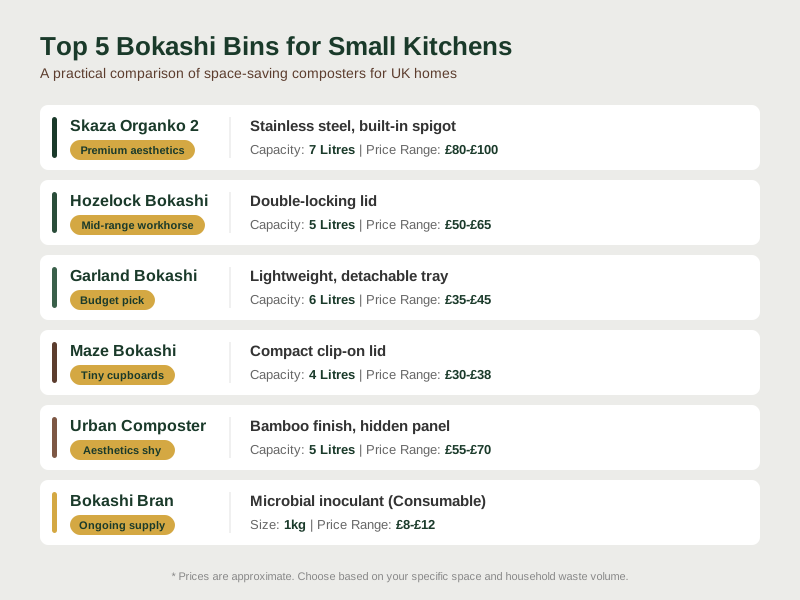
| Skaza Organko 2 (paid link) | 7 Litres | £80-£100 | Stainless steel, built-in spigot | Premium aesthetics |
| Hozelock Bokashi | 5 Litres | £50-£65 | Double-locking lid | Mid-range workhorse |
| Garland Bokashi | 6 Litres | £35-£45 | Lightweight, detachable tray | Budget pick |
| Maze Bokashi | 4 Litres | £30-£38 | Compact clip-on lid | Tiny cupboards |
| Urban Composter | 5 Litres | £55-£70 | Bamboo finish, hidden panel | Aesthetics shy |
| Bokashi Bran (Consumable) | 1kg | £8-£12 | Microbial inoculant | Ongoing supply |
Fit Finder: Will It Fit Your Cupboard?
| Model | Height | Width | Depth | vs Standard UK Under-Sink (60×50×35 cm) |
|---|---|---|---|---|
| Skaza Organko 2 | 32 cm | 26 cm | 26 cm | Fits with room to spare |
| Hozelock Bokashi | 30 cm | 24 cm | 24 cm | Fits comfortably |
| Garland Bokashi | 28 cm | 22 cm | 22 cm | Compact, leaves space for tray |
| Maze Bokashi | 26 cm | 20 cm | 20 cm | Tiny cupboard friendly |
| Urban Composter | 30 cm | 24 cm | 24 cm | Fits, keep away from pipes |
Flat Dweller’s Checklist
- Bin sits on a tray or mat to catch drips
- Lid can be opened without hitting sink plumbing
- Location is away from direct sun and radiators
- Landlord has been notified (if required by tenancy)
- Backup plan for burying waste is ready (wormery, pot, or community garden)
Before You Buy
Bokashi is the most straightforward indoor waste solution for renters and anyone with a cramped kitchen. Pick a bin with a solid seal, a reliable drip system, and a capacity that matches your weekly waste output—then keep a steady supply of bran on hand.
If you want to read more about the mistakes I made when I first started, have a look at my about page. Otherwise, your next logical step is to map out a space under the sink or on the counter, order your bin, and start saving those vegetable peelings.
Got more questions after you’ve had a go? Drop me a line on the contact page – I’m always happy to help a neighbour avoid the same faff I went through.
Pick a bin that fits your space, and you’ll barely notice it’s there.
Related Guides
For a complete overview, see our How to Set Up a Bokashi Bin UK: Step by Step for Beginners.
Where I Learned This
- Garden Organic — Bokashi Composting
- Quickcrop — Indoor Composting
- Royal Horticultural Society — Composting
As an Amazon Associate I earn from qualifying purchases. The products linked above are ones I would use or recommend in my own garden setups.
Note: General guidance only, verify details with a qualified professional or official source.