Best Wormery UK: Top Picks for Beginners
As an Amazon Associate I earn from qualifying purchases. This page contains affiliate links — if you buy through them, I earn a small commission at no extra cost to you.
A decent wormery costs between £60 and £120 in the UK, but the real investment is time — you’ll spend roughly 10 minutes a week feeding and checking moisture. Here’s how to pick a bin that won’t turn that 10 minutes into a daily chore.
What is a Wormery? (The Basics)
A wormery—also called a vermicomposter—is a sealed, ventilated box that houses composting worms, usually red wigglers (Eisenia fetida). The worms munch your kitchen scraps and excrete nutrient-rich castings, often nicknamed “black gold”. As Garden Organic points out in their composting guidance, these setups are brilliant for homes without gardens because they are compact and self-contained. The system needs to stay warm (ideally 15–20°C) and moist, but it doesn’t require a lawn; a cupboard, hallway, or shaded balcony works perfectly.
Bokashi, on the other hand, isn’t a worm set-up at all. It uses a handful of effective microorganisms mixed with a dry bran to ferment waste anaerobically. The big advantage? You can toss in meat, dairy, and even fish—something most wormeries will reject. The downside is you still need a second step: bury the pre-compost or add it to a garden heap or soil factory to finish the breakdown.
| Feature | Wormery (Vermicomposting) | Bokashi |
|---|---|---|
| What you can feed | Fruit, veg, coffee grounds, tea bags (no meat, dairy, large bones) | Anything – meat, dairy, fish, cheese |
| Winter handling | Needs insulation; worms go inactive below ~10°C | Works year-round indoors; fermentation slows but continues |
| Odour | Should smell earthy; bad smell means imbalance | Can emit a strong vinegar-like “tea” if over-fed |
| Space | Compact box, usually 10-15L | Two-bucket system, similar footprint |
If you’re a flat-dweller who only scraps veg, a wormery is the cleanest route. If you can’t guarantee a meat-free bin, keep a bokashi bucket handy and use the wormery for the rest.
Top Picks for Beginners: Vermicomposting (Wormeries)
Wormcity Wormery (paid link) – the winter-proof workhorse
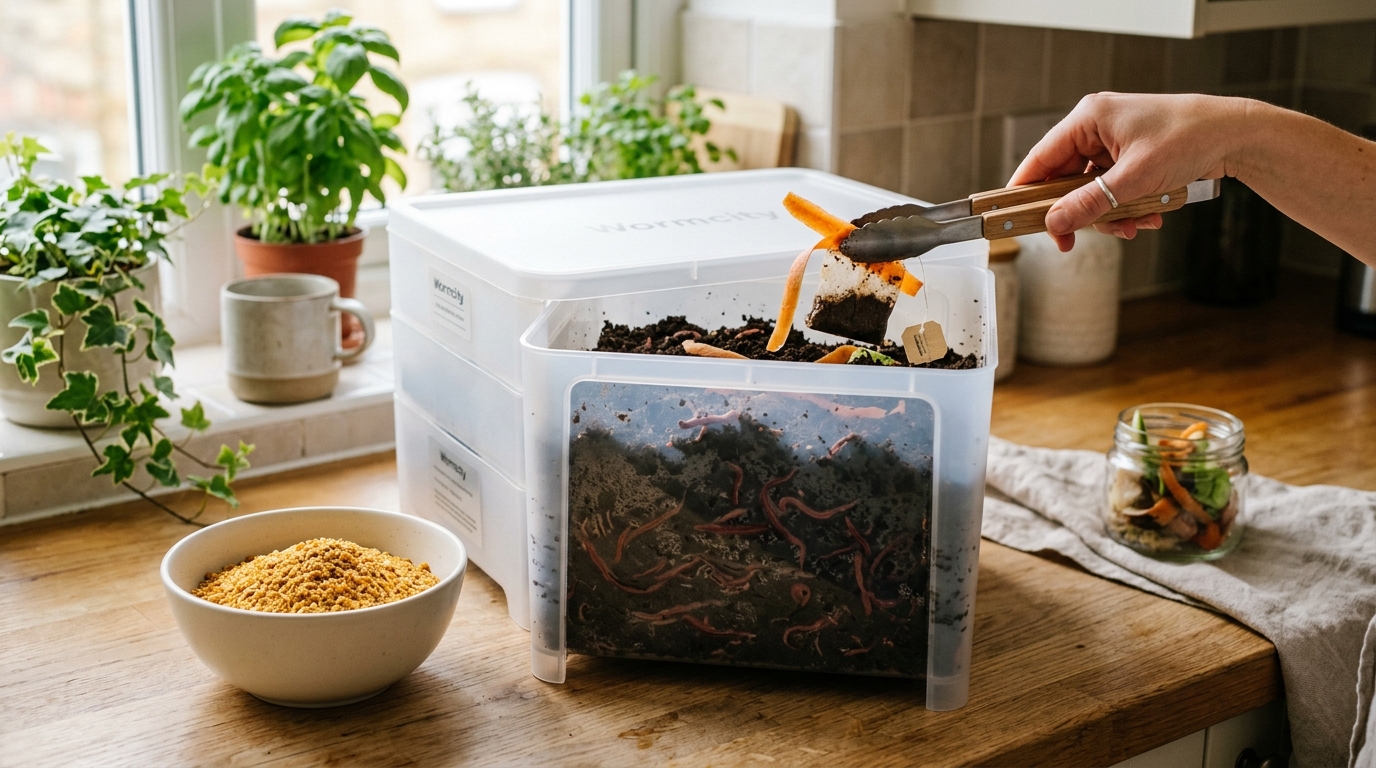
I first tried the Wormcity when my garage turned into a chilly pantry last December (you can read more about my early winter composting disasters on my about page). The double-walled plastic and the insulated lid meant the internal temperature stayed above 12°C even when the radiator was off. It is incredibly durable, and the five-year warranty backs that claim.
Why it’s spot on:
- Capacity of about 15L – enough for a single flat’s weekly waste.
- Heavy-duty lid with a built-in drainage tray that keeps the base dry.
- The transparent side lets you watch the worms without opening the box, which is a real morale boost.
The catch: It retails for roughly £70–£90, so it’s not the cheapest entry point. If you’re on a tight budget, the following option will still do the job.
Can-O-Worms (paid link) – the best value choice
The Can-O-Worms kit is a favourite on the Wiggly Wigglers site for renters. The plastic is thinner than the Wormcity’s, so you need to be a bit more careful when moving it, but the fly-proof lid and the simple “snap-together” design make it a breeze to assemble. I’ve seen a few users report the lid latch loosening after a few months—a small price to pay for the roughly £45–£55 price tag.
Why it works for beginners:
- Clear, colour-coded trays for feeding and harvesting.
- Comes with a starter pack of 500 red wigglers, so you don’t have to source the worms separately.
A note of caution: The thinner walls mean you’ll want to add a bit of bubble wrap in winter; otherwise, the worms can become sluggish.
Worm Café – the stylish, stable option
If you care about aesthetics as much as function, the Worm Café’s sleek, matte-black finish looks right at home on a kitchen shelf. The internal frame is reinforced with stainless steel ribs, so the box won’t crack if you accidentally bump it. I placed mine on a narrow balcony rail, and the stability meant I never had to worry about it tipping over when a gust of wind knocked the balcony door shut.
Pros:
- Integrated worm-harvest tap that lets you collect castings without lifting the lid.
- The lid seals tightly, keeping fruit-fly invasions at bay.
Cons: It’s the priciest of the lot at around £85–£110, and the tap can be a bit fiddly if you’re not used to it.
Top Picks for Beginners: Bokashi Systems
Skaza Organko (paid link) 2 – the all-in-one kit that saves space
The Skaza Organko 2 (paid link) arrived on my doorstep with two stackable buckets, a sturdy lid, and a built-in tap for the fermented “tea”. What I love is that the second bucket doubles as the storage container for the pre-compost, so you don’t need to buy a separate bin later. The airtight seal is solid—I’ve kept it under my kitchen worktop for six months with zero odour bleed-through.
Why it stands out:
- Capacity of 12L per bucket – perfect for a flat’s weekly waste.
- The lid’s silicone gasket makes the system virtually smell-free, even with meat scraps.
The trade-off: You’ll need to keep a supply of bokashi bran, which runs about £8–£12 per 500g bag. It’s an ongoing cost, but the bran is the secret sauce that makes the fermentation work.
Hozelock Bokashi (paid link) – the sturdy, no-frills favourite
The Hozelock kit is a bit more utilitarian—a plain grey bucket with a robust clamp-lid. The tap is a simple spigot that lets you drain the liquid straight into a plant pot. I’ve used it in a small flat where space is at a premium; the bucket fits snugly under the sink. The main attraction is the price—roughly £45–£55—which makes it a sensible starter if you’re not ready to splurge.
What to watch: The lid’s rubber seal can wear after a year of heavy use, so keep an eye on it if you plan to keep the system long term.
Maze Bokashi (paid link) – the compact, apartment-friendly model
Maze’s bokashi bucket is the smallest on the market, at just 8L. It’s ideal if you live in a studio flat and only have a cupboard to hide it in. The lid clicks shut, but the seal isn’t as tight as the Skaza’s, so you’ll want to keep the bucket on a tray to catch any stray drips. It’s a decent entry point at around £35–£40, but be prepared for a little extra vigilance on the smell front.
Wormery Comparison at a Glance
| Model | Price (GBP) | Capacity | Worms Included | Warranty | Footprint |
|---|---|---|---|---|---|
| Wormcity Wormery | £70–£90 | ~15L | No | 5 years | 30 × 40 cm |
| Can-O-Worms | £45–£55 | ~20L | Yes (500) | 2 years | 35 × 35 cm |
| Worm Café | £85–£110 | ~20L | No | 3 years | 35 × 35 cm |
| Skaza Organko 2 | £50–£60 | 12L (×2) | N/A (bokashi) | 2 years | 25 × 30 cm |
| Hozelock Bokashi | £45–£55 | 16L | N/A (bokashi) | 1 year | 25 × 30 cm |
| Maze Bokashi | £35–£40 | 8L | N/A (bokashi) | 1 year | 20 × 25 cm |
Which Size for Your Household?
| Household | Weekly Waste | Best Option | Why |
|---|---|---|---|
| 1 person, flat | ~1–2 kg | Junior / Can-O-Worms | Compact, easy to manage |
| 2 people, flat | ~2–3 kg | Wormcity / Worm Café | More capacity, stable temps |
| 3–4 people, house | ~4–5 kg | Wormcity 2-tray or larger | Handles volume, faster processing |
| Meat-eaters, any size | Variable | Skaza Organko 2 (bokashi) | Handles all food types |
Hidden costs to factor in: Bokashi bran runs £8–£12 per 500g bag and lasts 2–3 months for a typical flat. Wormeries need almost no running costs, but you may want to buy a coir brick (£8–£12) every 6–12 months and a replacement tray every few years. Factor in roughly £15–£25 per year for wormery upkeep, or £30–£50 per year for bokashi.
How to Get Started (UK Specifics)
First, decide where you’ll house the system. For a wormery, the hallway or under-stair cupboard works well—you need a spot that’s out of direct sunlight but still above the chill of a cold garage. For bokashi, the kitchen bench is ideal; the lid stays sealed, and you can dump the liquid straight into a watering can for your houseplants.
A wormery works best when kept between 15°C and 20°C, with a moisture level similar to a wrung-out sponge. If the bin gets too dry, add shredded newspaper or cardboard; if it’s too wet, toss in dry shredded paper or a handful of coir. The internal temperature can be maintained in a UK flat during winter by wrapping the unit in bubble wrap and placing it in a cupboard that stays above 10°C. Regularly checking the moisture and ensuring good ventilation will prevent foul smells and keep the worms happy, meaning you’ll get a steady supply of black gold for your balcony pots.
What NOT to feed:
- No meat, dairy, fish, or bones in a wormery—they rot, attract flies, and can kill the worms.
- Avoid large citrus pieces and onions in both systems; they can make the pH too acidic.
- In bokashi, you can throw in meat, but don’t overload the bucket—a thin layer mixed with plenty of bran is best.
Quick Start Checklist – the thing you’ll actually print and stick on the fridge:
- Pick your system: Decide whether a wormery or a bokashi bin suits your waste habits best.
- Get your workers: Buy a starter pack of red wigglers (if you chose a wormery).
- Stock up on bran: Grab a 500g bag of bokashi bran (if you chose bokashi).
- Find a home: Choose a dry, ventilated spot—kitchen bench for bokashi, cupboard or balcony for a wormery.
- Prepare for winter: Wrap the wormery in bubble wrap for the colder months, or keep the bokashi lid sealed tight indoors.
Download the Free Composting Starter Checklist and tick those boxes off one by one.
Maintenance & Troubleshooting
📺 Watch: WHY ARE MY WORMS DETERMINED TO ESCAPE? — Wiggly Wigglers
Fruit flies – the tiny nightmare
The most common complaint I’ve heard from flat-dwellers is a sudden swarm of fruit flies. The fix is simple: bury food scraps at least 5cm deep in the bedding, and add a thin layer of shredded newspaper on top. The newspaper acts as a barrier that flies can’t penetrate. If you still see flies, give the bin a quick wipe down with a weak vinegar solution and let it dry before refilling.
Smell – when “earthy” turns pungent
A wormery that smells like a rotting bin usually means you’ve overfed it or the bedding is too wet. The remedy is to add more dry carbon—shredded cardboard, newspaper, or even a bit of dry leaves. Stir the contents gently and check that the drainage holes aren’t blocked. In a bokashi set-up, a strong vinegar smell or a bin that has gone anaerobic indicates the bucket is too full; simply drain the liquid and give the bin a night to settle before adding more waste.
Maggots – the unwelcome guests
Seeing maggots is a sign the environment is too moist and warm for worms. The quickest cure is to remove the offending scraps, add a dry layer of bedding, and turn the contents with a small garden fork. If maggots persist, it may be worth emptying half the bin and starting fresh—a bit of a faff, but it saves the whole system.
Before You Buy
If you’re a flat-dweller who wants a low-maintenance, odour-free way to turn kitchen waste into plant food, the Wormcity wormery is the most reliable choice for winter, while the Can-O-Worms offers a budget-friendly entry point. For meat-eaters or anyone who can’t guarantee a veg-only kitchen, the Skaza Organko 2 bokashi kit gives you a sealed, smell-free solution that fits neatly under a sink. Whichever system you pick, remember to insulate your wormery in the colder months and keep a disciplined feeding routine—the worms will thank you with rich black gold.
Ready to make the leap? Download the Free Composting Starter Checklist and get your new wormery or bokashi bin up and running without a hitch. If you’ve got questions or hit a snag, drop me a line – I’m always happy to help a neighbour get their compost sorted.
Don’t buy the biggest bin you can afford. A half-empty wormery is harder to keep moist and warm than a full one. Start small — you can always upgrade once the colony has doubled.
Related Guides
For a complete overview, see our How to Set Up a Wormery for the First Time UK.
References
As an Amazon Associate I earn from qualifying purchases. The products linked above are ones I would use or recommend in my own garden setups.
Note: General guidance only, verify details with a qualified professional or official source.