Bokashi vs Wormery: Which Is Right for Your Flat?
As an Amazon Associate I earn from qualifying purchases. This page contains affiliate links — if you buy through them, I earn a small commission at no extra cost to you.
A bokashi bin costs £35–£50 upfront plus £8–£12 per month for bran. A wormery costs £60–£120 upfront with almost no running costs. Over two years, the wormery wins on price — but only if you have a garden to bury the bokashi waste.
The Real Question: What Waste Do You Actually Produce?
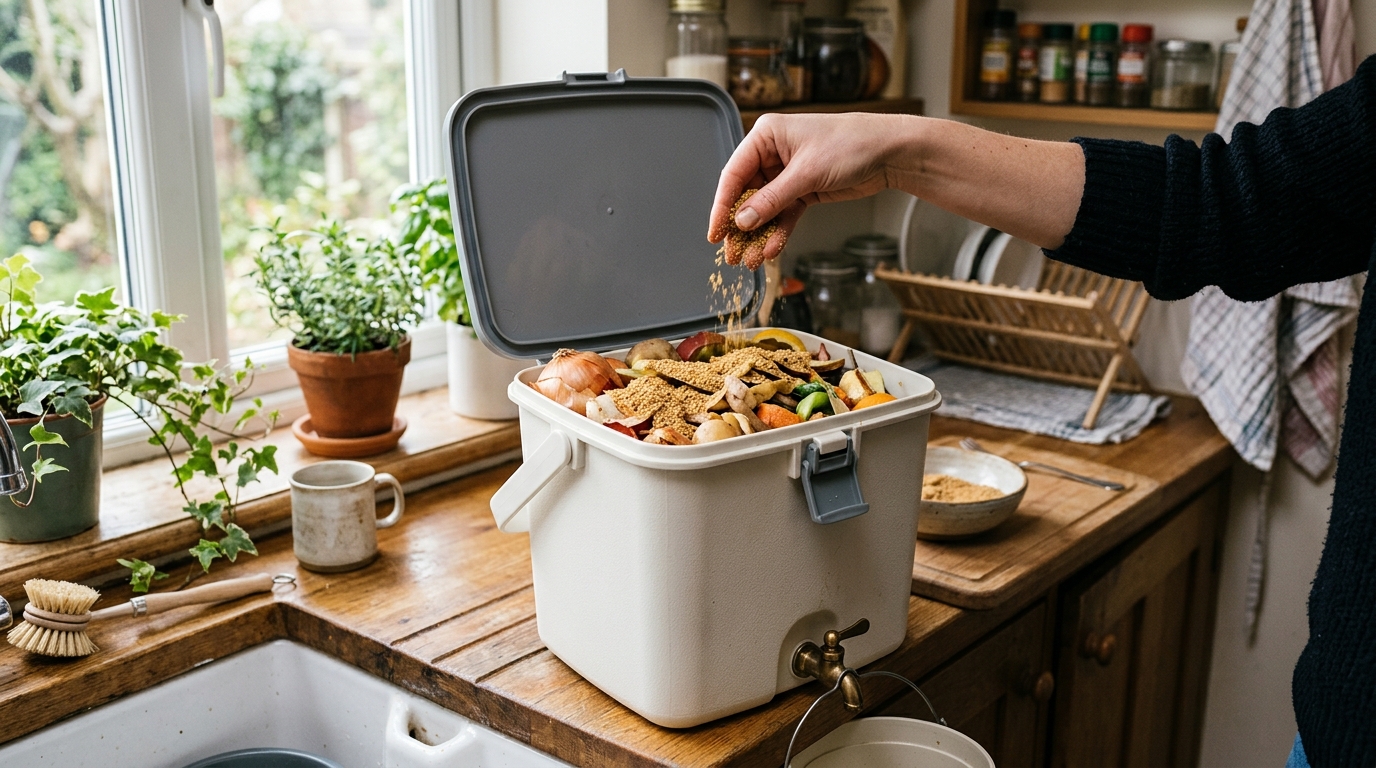
Bokashi is the “All-You-Can-Eat” bin. It ferments everything you throw at it — cooked meat, dairy, fish, citrus peel, and even those stubborn onion skins. The process is anaerobic, so the waste never really rots; it turns into a pickled slurry that smells more like sour cider than a rotting bin.
Wormery is the “Strict Vegan” bin. The worms only munch on soft fruit and veg scraps, tea bags, coffee grounds, and shredded paper. As Garden Organic rightly points out, worms need a balanced diet of greens and browns, but animal products are strictly off the menu. Anything with protein — meat, fish, eggs, dairy — will either kill the worms or attract pests.
What goes in?
| Bokashi | Wormery | |
|---|---|---|
| Cooked meat & fish | ✅ | ❌ |
| Dairy & cheese | ✅ | ❌ |
| Citrus peel | ✅ | ✅ (in small amounts) |
| Cooked veg | ✅ | ✅ |
| Tea bags, coffee | ✅ | ✅ |
| Bread, pasta | ✅ | ✅ (no sauces) |
| Garden waste | ✅ (if shredded) | ✅ (if not woody) |
If you’ve read a bit about my early composting disasters on my about page, you’ll know I learned the hard way that trying to feed a wormery a weekend’s worth of leftover roast chicken ends in a full-on maggot party. The worms drop dead and the smell spreads to the hallway. The reality is, if you want to compost cooked meat in a flat, bokashi is the only safe route.
The Space Reality
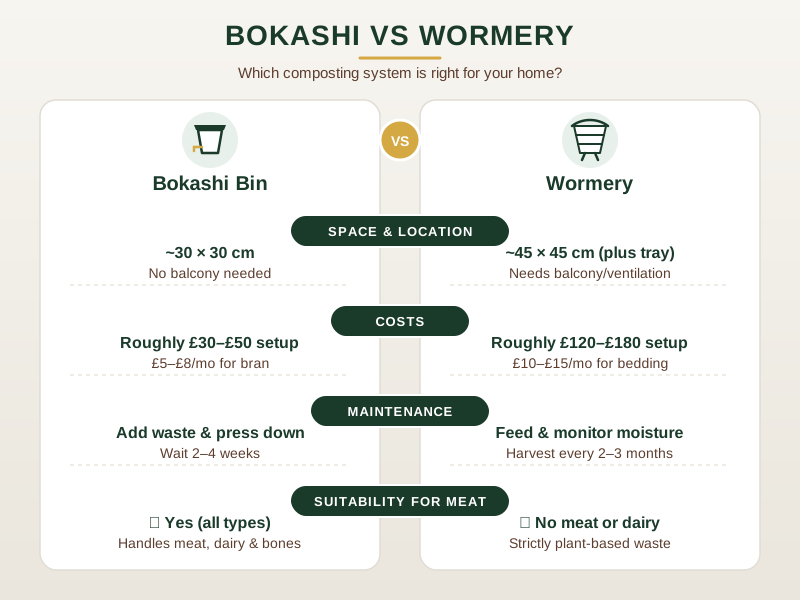
Bokashi bins are compact — roughly 30 × 30 cm — and seal airtight, so they sit happily under a kitchen sink or in a utility cupboard. A wormery needs more room: roughly 45 × 45 cm plus a drip tray, and it requires airflow, so a cupboard is too stuffy. Most flat-dwellers keep a wormery on a balcony, in a covered outdoor corner, or on a well-ventilated shelf.
If you have no outdoor space at all, bokashi is the practical choice. The sealed bucket contains everything. A wormery in a cramped, unventilated kitchen will eventually smell if you overwater or overfeed.
The Post-Processing Problem (And Why It Matters)
Bokashi waste isn’t finished compost — it’s pickled food that needs a second stage. The liquid that drips from the bin (often called “the tea”) is a potent, acidic fertiliser, while the solid “pre-compost” still needs to be broken down.
Option A — Wormery finish: Dump the pickled solid into a wormery. The worms love the extra carbon and the anaerobic fermentation actually speeds up their activity. This works beautifully if you have a balcony or a sunny spare room where a worm bin can breathe.
Option B — Liquid gold: Collect the bokashi tea, dilute it roughly 1:100 with water and use it to water houseplants. It’s a quick, garden-free way to turn waste into a plant tonic. I once used the tea on my pothos and saw new growth within a week — a real morale boost.
If you have no garden, the liquid route means you never have to “bury” the waste. Just store the tea in a sealed bottle, label it, and drizzle it onto your indoor foliage. The Royal Horticultural Society notes that bokashi systems are brilliant for small spaces, provided you always dilute the highly acidic liquid before letting it anywhere near your plant roots.
Smell and Pests: Which Is Actually Safer?
Smell: Bokashi bins are sealed airtight, so any odour stays inside. A well-managed bin smells like a mildly fermented pickle jar — nothing that will set off the neighbours. Wormeries need airflow; if you forget to vent them, a wet, earthy smell can escape, especially in a cramped flat.
Pests: Because bokashi is anaerobic, maggots and fruit flies can’t develop inside the bucket. Wormeries, on the other hand, can become a fruit-fly magnet if the lid isn’t tight or the bedding stays too damp. I once had a flatmate who kept a wormery on the balcony; a stray fruit-fly landed on the lid, the whole bin exploded with larvae, and a rat showed up the next week. Switching to bokashi sorted it overnight.
Rats: Rats are attracted to protein and to worm activity. A sealed bokashi bin with meat scraps is a dead-end for them, while an open wormery can act as a beacon. If your building has a strict “no pest” clause in the tenancy agreement, bokashi is the safer bet.
If you do have a balcony, a wormery works well — just keep it covered with a breathable lid and empty the excess moisture regularly. The Waste and Resources Action Programme (WRAP) stresses that managing food waste indoors requires secure, sealed caddies to prevent pest issues and comply with local regulations.
The Honest Cost Breakdown
A decent bokashi bin setup will cost you roughly £30 to £50 upfront with ongoing bran costs of about £5 a month, while a starter wormery is more of an investment at roughly £120 to £180. Bokashi is the clear winner for tight budgets and tiny kitchens, but a wormery pays off long-term if you have the balcony space and want a constant supply of free compost.
| Factor | Bokashi Bin (typical) | Wormery (typical) |
|---|---|---|
| Footprint (kitchen) | ~30 × 30 cm | ~45 × 45 cm (plus tray) |
| Initial cost | Roughly £30–£50 | Roughly £120–£180 |
| Ongoing cost (per month) | £5–£8 for bran | £10–£15 for bedding (paper, shredded cardboard) |
| Maintenance effort | Add waste, press, wait 2–4 weeks | Feed, monitor moisture, harvest every 2–3 months |
| Suitability for meat | ✅ (all types) | ❌ |
| Balcony needed? | No | Yes (or indoor with good ventilation) |
A budget starter is the Addis Compost Caddy (paid link) — a simple plastic bucket with a sealed lid that you can pair with a sachet of bokashi bran for under £25. For a wormery, the Wiggly Wigglers “Starter Worm Kit” is the most cost-effective entry point, though you’ll need at least a 30-litre tray to give the worms room to roam.
If you’ve got £20 to spare, the bokashi route gets you composting today. If you can stretch to £150 and have a balcony, the wormery adds a free, ongoing supply of rich worm castings that you can use on balcony herbs or indoor pots.
No Garden? No Problem
If you live in a flat with no outdoor space, a wormery is the obvious choice — but bokashi is still workable if you know the disposal routes.
Burying bokashi waste indoors: Fill a large storage tub or old recycling box with multipurpose compost. Dig a trench, tip in the pickled bokashi waste, cover with 10cm of fresh compost, and leave it sealed for four weeks. The microbes finish the breakdown in the dark. You now have enriched compost for houseplants — no garden required.
Council green bin disposal: Most UK councils accept pre-composted bokashi waste in green garden waste bins. The fermentation neutralises meat and dairy, so it no longer poses the contamination risk of raw food waste. Check your local council’s accepted materials list — some explicitly welcome fermented food waste, while others only take raw veg peelings.
Bokashi + council food caddy hybrid: If your council runs a food waste collection (most do in England and Wales), you can use bokashi to reduce volume and smell, then transfer the pickled solids to the council caddy. The caddy stays fresher, the waste decomposes faster at the processing plant, and you get the bokashi tea for your plants.
Council Green Bin Decision Branch
| Your Situation | Best Route |
|---|---|
| Council collects food waste weekly | Use bokashi for tea, transfer solids to council caddy |
| Council collects garden waste only | Bury bokashi in indoor compost tub, or switch to wormery |
| No council collection at all | Wormery is simpler; bokashi needs indoor burial plan |
| Rented flat, move often | Bokashi bin is portable; wormery is harder to relocate |
The Flat-Dweller’s Decision Tree
Do you cook meat or dairy more than twice a week?
- Yes → Bokashi (or hybrid)
- No → Either system works
Do you have a balcony, patio, or even a windowsill with space for a 30cm bin?
- Yes → Wormery is viable
- No → Bokashi or council collection
Do you want finished compost for houseplants?
- Yes → Wormery gives castings; bokashi needs an extra soil-factory step
- No → Bokashi tea + council disposal is enough
Is your budget under £50?
- Yes → Bokashi starter kit
- No → Either system; wormery pays back over two years
The Hybrid Workflow: Using Both
Scenario 1 — No balcony, meat-heavy diet:
- Set up a bokashi bucket under the kitchen sink (the warmth helps in winter).
- Every time you cook, toss the scraps in, sprinkle bran, and press down firmly to remove air.
- When the bucket is full (about 2–3 weeks), drain the tea, dilute it, and feed your houseplants.
- Bury the solid pre-compost in a large pot of old potting mix or a discreet indoor bin for a few weeks, then use it as a soil amendment.
Scenario 2 — Balcony available:
- Use bokashi for everything, including meat and dairy.
- Every two weeks, shovel the pickled solids into a wormery on the balcony.
- The worms finish the job, producing castings you can scoop straight into your indoor plant pots.
- Collect the bokashi tea for a quick liquid feed on sunny windowsills.
Scenario 3 — Heavy cooker, love fresh herbs:
- Run bokashi all year for meat and dairy scraps.
- Keep a small wormery on the balcony for daily veg scraps — the worms love the constant supply of fresh greens.
- Rotate the pre-compost between the two systems to keep both happy and your waste stream flowing.
The hybrid setup gives you the best of both worlds: the odour-free, meat-handling power of bokashi and the nutrient-rich, soil-building finish of a wormery, without ever needing a garden.
Before You Buy
You’ve seen how bokashi handles the messy, protein-rich waste and how a wormery can finish the job with nutrient-dense castings. The hybrid workflow lets you compost everything, keep the flat fresh, and even give your houseplants a boost — all without a patch of grass to your name.
You have the full picture — the space you have, the waste you generate, and the cost you’re comfortable with. If you want more practical guides on getting your indoor soil sorted, check out the rest of the blog. Or, if you’re still stuck on which setup to choose, feel free to get in touch and I’ll try to point you in the right direction.
Once you’ve picked your system, the only thing left is to start.
Explore More Topics
Go deeper on specific topics:
References
- Garden Organic - Worm Composting
- Royal Horticultural Society - Bokashi Composting
- Waste and Resources Action Programme (WRAP) - Food Waste Management
As an Amazon Associate I earn from qualifying purchases. The products linked above are ones I would use or recommend in my own garden setups.
Note: General guidance only. Always verify details with a qualified professional or official source.