My Bokashi or Wormery Smells: How to Fix Common UK Problems

Most problems you will encounter — nasty smells, soggy bedding, unwelcome maggots, or winter-slowed worms — are fixable with a bit of balance and a touch of airflow. Whether your wormery has turned into a swamp or your bokashi tap is leaking foul liquid across the lino, you are usually just a few tweaks away from sorting it out.
Ready to turn that panic into a manageable to-do list? Download the Free Composting Starter Checklist and keep it handy while you read on.
Why does my indoor compost smell bad?
A foul smell is the fastest way to lose confidence in any indoor composting setup. The root cause is almost always a lack of oxygen or a failed seal, allowing the wrong kind of bacteria to take over. The trick is to identify exactly what you are smelling.
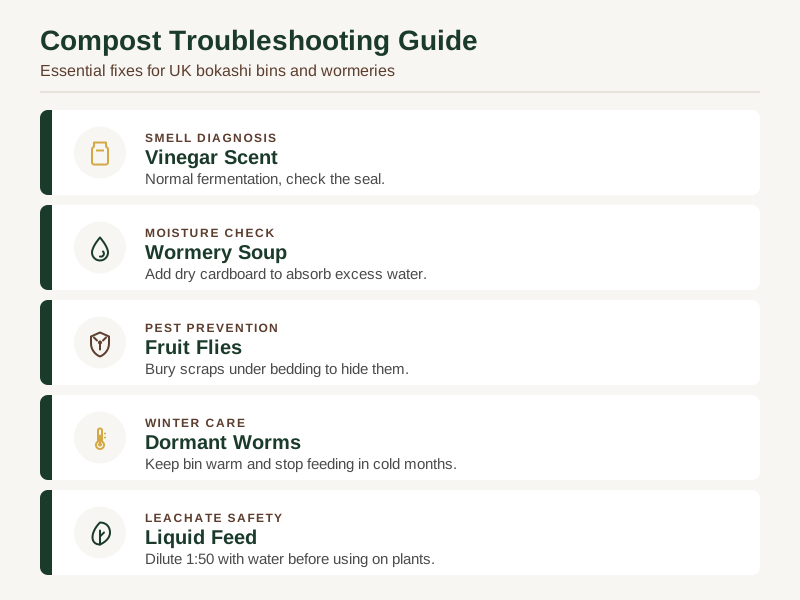
Vinegar smell – Bokashi During the anaerobic fermentation stage, a faint vinegar or sour wine aroma is spot on. It tells you the microbes are doing their job. The problem appears when the smell leaks out of the tap or lid. Check the tap seal – a loose rubber gasket will let the “tea” (bokashi leachate) escape into the kitchen and into the hallway. A quick snap-tighten of the lid and a fresh gasket (roughly £3–£5 from a hardware shop) usually sorts it.
Rotten-egg smell – Wormery That sulphur-like stink signals anaerobic pockets. It means the worm bedding is too wet or compacted, starving the worms of oxygen. The cure? Add a handful of dry carbon – shredded cardboard, newspaper, or peat-free compost – and gently stir the top layer to introduce air. The wormery should then smell more like rich, damp earth rather than a farmyard.
Ammonia / “Sharp” smell Overloading with green waste (kitchen scraps, especially onions, garlic, or citrus) or sneaking in meat/dairy creates a high-nitrogen environment. Balance it with brown material like dry leaves, straw, or brown paper. The Royal Horticultural Society suggests aiming for a good balance of greens and browns, but a 2:1 brown-to-green ratio is a very safe rule of thumb when you are trying to rescue a smelly bin.
Smell Test Checklist
- Is it sour vinegar? → normal fermentation, check the seal.
- Is it sulphur/rotten-egg? → gone anaerobic, add dry bedding.
- Is it sharp ammonia? → too much green waste, add brown cardboard.
I once left the tap of my first bokashi bucket slightly ajar. By the time I noticed, the tea had seeped onto my kitchen floor and the whole flat smelled for days. A quick replacement of the silicone seal solved it, and I learned to keep the tap snug every time.
Wetness & Leaking (The “Drowning” Problem)
A soggy wormery or a leaking bokashi bin is more than a mess – it tells you the moisture balance is fundamentally off.
Wormery is a soup If the contents are swimming, you have probably added too much liquid-heavy food waste or not enough dry bedding. According to Garden Organic, a wormery should feel like a wrung-out sponge – damp but not dripping. Toss in extra shredded cardboard or newspaper, then gently turn the top layer to improve aeration.
Bokashi leaking Leachate should collect in the bottom tray, not spill over the edge. A common cause is overfilling the bucket; the pressure forces liquid out through the tap. Reduce each load by about a litre, and make sure the tap is tightened after each addition.
Winter condensation Cold, damp UK winters increase condensation inside indoor bins. A tiny vent – a drilled hole covered with a breathable mesh – can let excess moisture escape without inviting flies. Keep the bin in a warmer spot (e.g., under the sink) where temperatures stay above 12°C; that also keeps the fermentation ticking over nicely.
Handling Leachate Collect the liquid in a separate container, dilute it 1:50 with water, and use it as a nitrogen-rich feed for houseplants. Never pour undiluted leachate straight onto the soil – it is acidic enough to scorch roots.
My first wormery turned into a swamp after a week of relentless rain in Manchester. I panicked, but a few layers of dry newspaper and a gentle stir brought it back to life within two days. The lesson? Always keep a dry “bedding bank” of torn cardboard on hand.
Pests & Maggots (The “Pest Invasion” Fear)
The thought of maggots wriggling out of your compost is enough to make anyone shut the lid and forget the whole project. Most pest problems stem from exposed food and poor sealing.
Fruit flies These love any exposed sugary waste. Bury each scrap under at least a centimetre of bedding and close the lid tightly. If you need a quick fix, a strip of double-sided tape on the inside of the lid’s rim will catch any stray flies before they escape into your kitchen.
Maggots They usually appear when meat or dairy has slipped into a wormery. Worms cannot digest these proteins fast enough, and maggots outcompete them for the same food. Remove any offending material immediately, and reinforce the lid with a rubber gasket (around £2 from B&Q).
Rats & larger pests While bokashi bins are generally pest-proof, a cracked lid or a permanent tap leak can invite rodents. Keep the bin on a sturdy shelf, and never store it directly on the floor. If you are using a wormery outdoors or on a balcony, place it on a plastic tray to catch any accidental spills.
Pest Exclusion Mini-Checklist
- Seal the lid with a rubber gasket.
- Bury all food waste under dry bedding.
- Use double-sided tape on the rim for fruit flies.
- Position the bin on a tray, off the floor.
Worm Health & Winter Survival (The “Dormancy” Gap)
Winter in the UK can feel like a death sentence for a wormery, but it is really just a long nap.
Worms stopped eating When temperatures dip below 10°C, red wigglers (Eisenia fetida) enter a dormant state. They will still move slowly, but you won’t see fresh castings. Keep the bin in a warmer room – a pantry or under the kitchen sink works well – and add a layer of dry newspaper on top to insulate them.
Floating worms If you spot worms bobbing on the surface or crawling up the sides en masse, they are trying to escape an anaerobic pocket. Add dry bedding and gently turn the top layer to re-introduce oxygen.
Bokashi freezing If the bucket freezes in an unheated garage, the microbial activity halts and the tea thickens. Move the bin to a heated cupboard or wrap it in an old blanket. Once thawed, give it a gentle shake to redistribute the contents and resume fermentation.
Suppliers like Wiggly Wigglers often note that a typical UK winter will see worm activity drop significantly – this is entirely normal and not a sign of failure. You do not need to feed them at all during the coldest months; just keep the bedding dry and the temperature above freezing.
Why is this happening? (Root Cause Analysis)
When a bokashi bin or wormery starts smelling, getting wet, or attracting pests, the root cause is almost always an oxygen-moisture imbalance. Too much wet kitchen waste (greens) without enough dry carbon (browns) creates a water-logged, high-nitrogen environment where anaerobic microbes thrive. This is exactly what produces those sharp vinegar, sulphur, or ammonia pongs.
The solution is simply to restore balance: add dry bedding such as shredded cardboard, newspaper, or peat-free compost to your wormery, and gently turn the top layer to introduce air. For bokashi, ensure the tap and lid are completely sealed so the fermented tea stays contained. Keeping a roughly 2:1 brown-to-green ratio and checking moisture levels regularly prevents the cascade of smells, leaks, and pest problems, keeping your indoor compost healthy throughout the year.
How to Rescue a Waterlogged Wormery
If your wormery has turned to sludge, do not bin it. Follow these steps to dry it out and save your worms.
Step 1: Stop feeding immediately Do not add any fresh kitchen scraps until the bin has recovered. The worms need time to work through the backlog of rotting food without adding more moisture to the system.
Step 2: Add dry carbon heavy-handedly Tear up dry corrugated cardboard, egg cartons, or newspaper and mix it generously into the top layer. You want to absorb the standing water quickly.
Step 3: Fluff the bedding Using a hand fork or a gloved hand, gently lift and turn the top few inches of bedding. This breaks up compacted, sludgy areas and lets oxygen reach the worms.
Step 4: Drain the sump Check the bottom collection tray. If it is full of liquid, drain it completely. Leaving a puddle of leachate at the bottom blocks airflow from underneath and keeps the whole system soggy.
Quick Answers
Can I put meat in a wormery?
No. Meat and dairy attract flies, putrefy quickly, and can easily kill the worms. If you want to compost those scraps, stick them in a bokashi bin where the anaerobic fermentation process handles them safely.
Why is my Bokashi liquid so smelly?
If the leachate smells like rotting meat or strong sulphur rather than a mild, sour vinegar, the batch has gone bad. Dilute it heavily (1:50 with water) before using it as a plant feed outdoors, or chuck it down the drain. A tighter lid will keep the odour contained for your next batch.
Do I need to drill holes in my Bokashi bin?
Generally, no. Bokashi bins are designed to be completely airtight, which keeps pests out and allows the anaerobic microbes to work. You would only drill holes if you plan to bury the bin directly in a traditional garden compost heap, which defeats the purpose of an indoor fermentation setup.
How long does it take a wormery to recover from overfeeding?
Usually about a week to ten days. Once you stop adding fresh food and mix in plenty of dry cardboard, the worms will slowly work through the excess. You will know it is sorted when the sharp smell fades back to a damp, earthy scent.
Can I feed bokashi pre-compost straight to my worms?
Not all at once. The acidity can shock the colony. Start with a tablespoon per tray in week one, then gradually increase to no more than 20% of their total food. Always let cold pre-compost reach room temperature before adding it in winter.
Bokashi-to-Wormery Transition Protocol
If you are feeding bokashi pre-compost to your worms, do it gradually. The acidity can shock the colony.
| Week | Bokashi Ratio | Wormery Bedding | Notes |
|---|---|---|---|
| 1 | 10% bokashi, 90% regular scraps | Extra dry cardboard | Mix in tiny amounts only |
| 2 | 20% bokashi, 80% regular scraps | Maintain dry top layer | Watch for escapees |
| 3 | 30% bokashi, 70% regular scraps | Standard bedding | Colony should adapt |
| 4+ | Up to 50% bokashi | Standard bedding | Do not exceed 50% |
Winter Transfer Warning Never add cold bokashi pre-compost to a wormery in winter. The temperature shock can kill a sluggish colony. Bring the pre-compost to room temperature for 24 hours before adding it.
pH Buffering for Wormeries Receiving Bokashi
Bokashi pre-compost is acidic (pH 3.5–4.5). Worms prefer pH 6.0–7.0. To bridge the gap without buying specialist kit:
- Agricultural lime — A light dusting (½ teaspoon per tray) from Wilko or any garden centre raises pH gradually.
- Crushed eggshells — Free and slow-release. Rinse, dry, and crush thoroughly.
- Wood ash — Use sparingly; a pinch per tray from a wood burner is enough.
- B&Q Natural Garden Lime or Westland Garden Lime — Both are widely available and worm-safe at low doses.
Smell Diagnosis Reference
| Symptom | Likely Cause | Immediate Fix | Prevention |
|---|---|---|---|
| Vinegar smell | Normal fermentation | Check tap seal and lid tightness | Replace gasket every 12 months |
| Rotten-egg smell | Anaerobic pockets | Add dry bedding and stir | Maintain 2:1 brown-to-green ratio |
| Sharp ammonia smell | Too much green waste | Add brown cardboard or leaves | Chop scraps small, bury deeply |
| Sour liquid | Leaking tea | Tighten tap or replace gasket | Drain leachate every 2–3 days |
| Floating worms | Lack of oxygen | Add dry bedding and fluff top layer | Add dry bedding weekly |
| Maggots | Meat or dairy in wormery | Remove waste and reinforce lid | Never add meat or dairy |
| Frozen contents | Cold temperatures | Move to warmer spot or wrap in blanket | Insulate bin before first frost |
| Winter slowdown | Low temperature | Reduce feeding, move indoors | Keep bin above 10°C year-round |
What to Do Now
Most problems you will encounter – nasty smells, soggy bedding, unwelcome maggots, or winter-slowed worms – are fixable with a bit of balance and a touch of airflow. Keep an eye on the brown-to-green ratio, add dry bedding when things get wet, and remember that a quiet winter is just a pause, not a failure.
The next logical step is to make sure you are set up for success from the start. Download the Free Composting Starter Checklist – it walks you through the essential supplies, seasonal tips, and a quick daily routine so you never end up staring at a smelly bin again.
If you are still stuck on a specific issue, feel free to get in touch or browse the blog for more troubleshooting tips. You have got this. With a bit of patience and the right tweaks, your bokashi and wormery will become the tidy, odour-free corner of your flat that quietly turns waste into black gold for your plants.
Explore More Topics
Go deeper on specific topics:
- Why Is My Bokashi Bin Not Working? UK Troubleshooting Guide
- Why Is My Wormery Smelling Bad UK? (And How to Fix It)
- How to Fix White Mould in Your Bokashi Bin
- Will Composting Worms Survive a UK Winter Outside?
- Are Fruit Flies in My Wormery Harmful?
Where I Learned This
- Royal Horticultural Society - Composting Advice
- Garden Organic - Worm Composting Guide
- WRAP (Waste and Resources Action Programme) - Food Waste Management
- Wiggly Wigglers - UK Supplier Advice
Note: General guidance only, verify details with a qualified professional or official source.