Will Composting Worms Survive a UK Winter Outside?
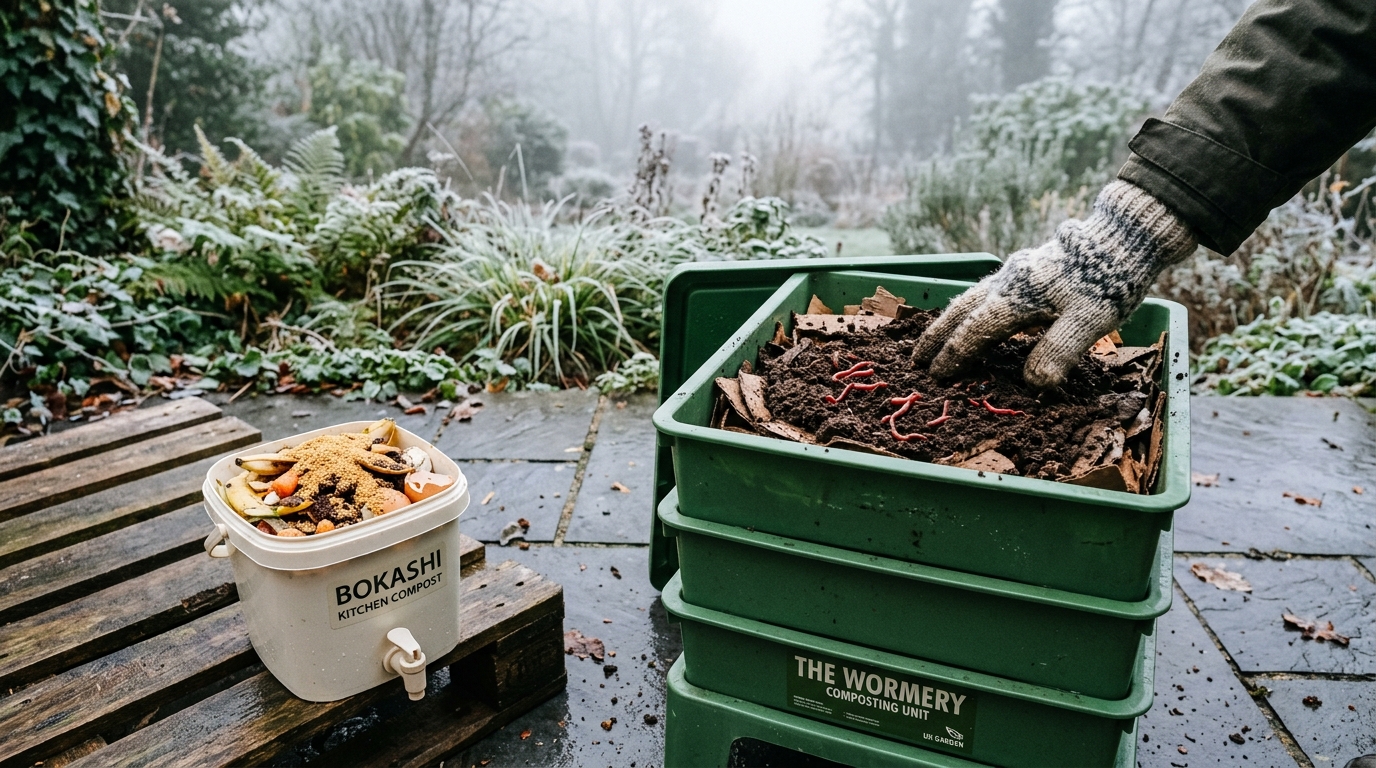
The UK winter of 2022–23 saw temperatures drop to -15°C in parts of Scotland. Most composting worms survived — not because they’re hardy, but because their owners understood one thing: dryness insulates better than any blanket.
Grab your Free Composting Starter Checklist and keep it handy for the next few months.
Dormancy vs. Death: The Critical Difference
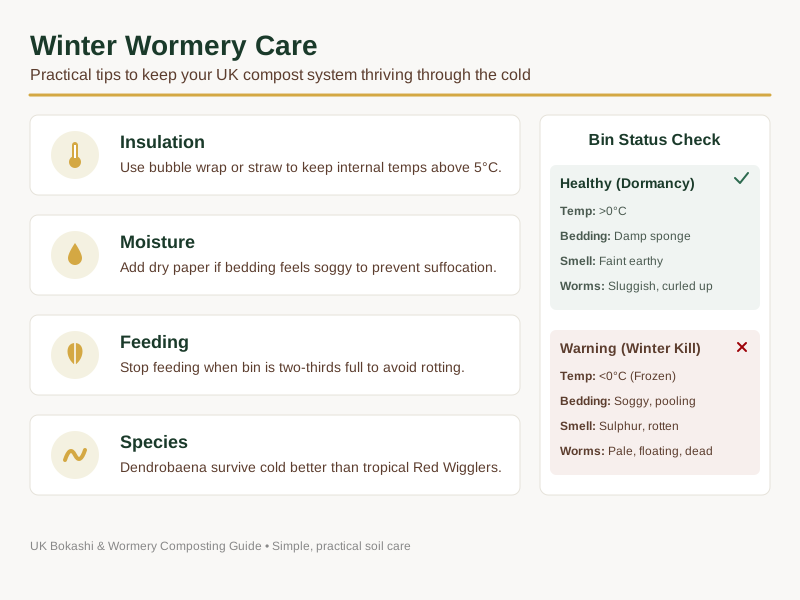
Most composting worms will not die during a typical UK winter, but instead enter a state of dormancy when the temperature drops below 10°C. In this protective state, they burrow deep into the centre of the bedding, move very sluggishly, and stop eating almost entirely, but they are very much alive. True winter kill only happens if the wormery freezes entirely solid (dropping below 0°C internally) or if the bedding becomes heavily waterlogged, which cuts off their oxygen supply and causes them to suffocate. I first panicked in November when my worms stopped moving, but a quick check with a soil thermometer showed the bin was sitting at 8°C. They will survive just fine, provided you keep the bin insulated, slightly above freezing, and dry enough to avoid the contents rotting.
Quick comparison
| Dormancy (healthy) | Winter Kill (problem) |
|---|---|
| Worms curl up, barely move | Worms float on top, look pale |
| Bedding is damp, not soggy | Liquid pools at the base, foul smell |
| No strong odour, just earthy | Rotten-egg or sulphur smell |
| Temperature stays above 0°C | Bin is frozen solid |
Red Wigglers vs. Dendrobaena: Which Handles Cold Better?
Before you panic about the cold, it helps to know exactly what species is living in your bin.
Worm ID quick guide
- Red Wigglers (Eisenia fetida) – bright reddish-brown, about 10 cm long, love warm, moist environments.
- Dendrobaena (European Nightcrawler) – paler, slimmer, up to 12 cm, native to temperate soils.
Red Wigglers are tropical-origin composters. They start to struggle when temperatures dip below 5°C and will die if the bin freezes. If you bought a starter kit from an online retailer, chances are it contains Red Wigglers unless the label explicitly says otherwise.
Dendrobaena are the hardier UK native. They can tolerate temperatures down to -2°C for short spells and will survive a typical British winter provided the bin isn’t sealed airtight and the bedding stays breathable.
When I swapped my Red Wigglers for Dendrobaena on a garden shed bin, the crew survived a Scottish winter without a heater. It is a clear reminder to always check the species label or ask the supplier what you are actually buying.
The Damp Cold Trap (And Why Moisture Kills Faster Than Frost)
Winter brings heavy condensation as the warm air from the decomposing matter in the bin meets the cold outdoor air. The moisture balance can quickly tip from “just right” to “sopping.” As Garden Organic notes, maintaining the right moisture balance is critical, because wet, heavy bedding forces out air and creates anaerobic conditions, leading to a rotten-egg smell and suffocating worms.
The fix:
- Add a layer of dry shredded newspaper or cardboard whenever the bedding feels wet. This absorbs excess liquid and restores airflow.
- Perform the squeeze test: grab a handful of bedding and give it a squeeze. A few drops of water are fine, but it should feel like a damp sponge, not a dripping rag.
- If the bedding looks bone-dry, lightly mist with room-temperature water using a spray bottle.
I once found a puddle at the bottom of my wormery in December; a quick toss of dry paper and the smell vanished. For more tips on balancing your bin, have a browse through our blog.
Insulation That Actually Works
The goal is to keep the internal temperature above 5°C without turning the bin into a sauna. Here are the UK-tested DIY methods that work on a balcony, shed, or garden corner.
1. Bubble-wrap wrap (the most effective)
- Measure the bin’s height and circumference.
- Cut a sheet of bubble wrap, air-side inwards – the bubbles act as a thermal barrier.
- Slip the wrap around the bin, overlapping a few centimetres.
- Secure with garden twine or duct tape, leaving a small vent at the top for airflow.
In my own setup, the temperature stayed around 12°C even when it was -5°C outside.
2. Straw jacket
- Fill an old pillowcase or burlap sack with dry straw or hay.
- Tie it shut and drape it over the bin, tucking the ends under the base.
- Straw breathes, so it won’t trap moisture, and it adds a natural look to the garden.
3. Raised legs
- Place the bin on a pallet, bricks, or purpose-made legs (roughly 10 cm high).
- This lifts the base off the cold ground, preventing ground frost from creeping up into the bedding.
4. Shed or garage placement
If you have a frost-free shed, move the bin inside. Even a non-heated garage that stays above 2°C is a massive upgrade over an exposed garden bed.
These insulation tricks are not a massive faff and they are cheap. Bubble wrap costs roughly £5 for a roll, and straw can be sourced from a local farm or pet shop for a few quid.
UK Regional Temperature Guidance
| Region | Typical Winter Low | Risk Level | Action Needed |
|---|---|---|---|
| Southern England (London, Brighton) | -2°C to -5°C | Moderate | Bubble wrap + raised legs |
| Midlands (Birmingham, Nottingham) | -5°C to -8°C | High | Full insulation + shed or garage if possible |
| Northern England (Manchester, Leeds) | -8°C to -12°C | Very High | Move to sheltered spot or indoors |
| Scotland (Edinburgh, Highlands) | -10°C to -15°C | Extreme | Indoor only for Red Wigglers; heavy insulation for Dendrobaena |
| Wales & Northern Ireland | -5°C to -10°C | High | Full insulation recommended |
The Winter Survival Protocol
Because the worms’ metabolism drops dramatically in the cold, over-feeding is the fastest way to create a rotting, foul-smelling mess. Follow this feeding checklist until the weather warms up:
- Stop adding food when the bin is about two-thirds full.
- Feed only greens (soft veg scraps) in small amounts; they generate a little heat as they break down.
- Boost browns – shredded cardboard, egg-boxes, dry paper – to soak up excess moisture.
- Avoid citrus, onions, meat, dairy, and anything that takes weeks to decompose; they can freeze and attract pests.
I stopped feeding my main outdoor bin in early November. The few scraps left in the bin were fully processed by March, and the worms emerged refreshed once the soil warmed up.
A quick visual audit each week will tell you whether your worms are merely dormant or in genuine trouble.
Good signs
- Worms are sluggish but still visible when you dig a shallow trench.
- Bedding feels damp, not soggy.
- No foul odour – just a faint earthy scent.
Bad signs
- Worms floating on the surface, gasping for air.
- Strong rotten-egg or sulphur smell – indicates anaerobic conditions.
- Bin is frozen solid; you can’t feel any give when you press the lid.
Action plan
- If you see floating worms, add a thick layer of dry newspaper and gently stir the bedding to introduce oxygen.
- If there’s a foul smell, remove any overly wet food, add dry bedding, and check the drainage tap isn’t blocked.
- If the bin is frozen, move it to a sheltered spot immediately or wrap it in additional insulation as described above.
Should You Even Bother?
Before you spend money on insulation or move the bin, ask yourself three questions:
1. What species do you have?
- Red Wigglers → worth protecting if you have 10+ minutes a week
- Dendrobaena → almost certainly worth it — they survive most UK winters with minimal help
2. How cold does your garden actually get?
- Sheltered courtyard in London → minimal effort needed
- Exposed allotment in Yorkshire → invest in insulation
- Scottish Highlands or exposed hillside → bring indoors or accept losses
3. Do you enjoy the process? If worm composting feels like a chore, winter maintenance will feel worse. A dormant bin still needs monthly checks.
The bottom line: If your bin cost under £30 and contains Red Wigglers, replacing them in spring (£12–£15) may cost less than bubble wrap, straw, and your time. If you have Dendrobaena or a bin you genuinely value, protection is the smarter spend.
| Condition | Worm Behaviour | Bedding State | Temperature | Smell |
|---|---|---|---|---|
| Healthy Dormancy | Curl up, barely move | Damp, not soggy | Above 0°C | Earthy, faint |
| Healthy Dormancy | Sluggish but visible | Damp sponge texture | 0–5°C | None to faint earthy |
| Early Warning | Stop eating, burrow deep | Soggy or drying out | Approaching 0°C | Slightly off |
| Winter Kill | Float on top, look pale | Liquid pools at base | Below 0°C | Rotten-egg |
| Winter Kill | No movement, gasping | Frozen solid or anaerobic rot | Below -2°C | Sulphur, strong foul |
Common Questions
Should I bring my wormery inside for the winter?
Yes, if you are using Red Wigglers and have the space, bringing them into a shed, garage, or utility room is ideal as they need temperatures above 5°C. Dendrobaena can stay outside provided the bin is well insulated and not frozen solid.
Can I put a wormery in a shed?
Absolutely. A dry, well-ventilated shed that stays above freezing is a massive upgrade over an exposed garden wall, keeping the worst of the wind and winter rain off the bin.
Will my worms die if the bin freezes?
If the internal bedding temperature stays below 0°C for an extended period, the worms will freeze and die. Proper insulation and keeping the bin off the cold ground are the best ways to prevent this.
What to Do Now
Worms can absolutely survive a UK winter, but they need a dry, insulated refuge and a trimmed-back diet. Remember the three-step Winter Survival Protocol: Insulate (bubble wrap, straw jacket, raised legs), Manage Moisture (dry bedding, squeeze test), and Reduce Feeding (stop at two-thirds full, favour greens and plenty of browns).
If you’ve checked your bin against the signs above and everything looks on track, you’re sorted for the next season. Keep your Free Composting Starter Checklist handy — it’s a simple sheet you can tape to the side of your shed or keep on the fridge as a reminder that your worms are worth protecting, and with a bit of care they’ll be bustling again come spring.
If you want to know more about me and how I started, or if you hit a snag and need some advice, feel free to get in touch. I’m always up for a chat over the fence. Check your bin when the weather warms up — a sluggish colony is a living colony.
Related Guides
For a complete overview, see our Bokashi and Wormery Troubleshooting UK: Fixing Common Problems.
Replace vs. Protect: The Cost Breakdown
| Approach | Cost | Effort | Best For |
|---|---|---|---|
| Do nothing, replace worms in spring | £12–£15 | None | Cheap bins, casual keepers, Red Wigglers in exposed spots |
| Basic bubble wrap + raised legs | £5–£10 | 30 minutes | Southern England, sheltered gardens |
| Straw jacket + garage placement | £10–£20 | 1 hour | Midlands and north, Dendrobaena bins |
| Full insulation + indoor space | £15–£30 | 2 hours | Scottish winters, valued colonies, year-round composting |
My view: If you have Dendrobaena and a garage, the £10 straw option pays for itself in worm castings by May. If you have Red Wigglers on a Cardiff balcony, the £5 bubble wrap is cheaper than a replacement colony and takes ten minutes to fit.
Further Reading
Note: General guidance only. Verify details with a qualified professional or official source.