How to Dilute Bokashi Tea (Safe Ratios for UK Drains & Soil)
As an Amazon Associate I earn from qualifying purchases. This page contains affiliate links — if you buy through them, I earn a small commission at no extra cost to you.
I learned this the hard way: a full cup of undiluted bokashi tea killed a £12 basil plant in 48 hours. The acidity was too strong, the roots burned, and the leaves turned crispy. Dilution is not optional — it’s the difference between fertiliser and poison.
What Bokashi Tea Actually Is (And What It Isn’t)
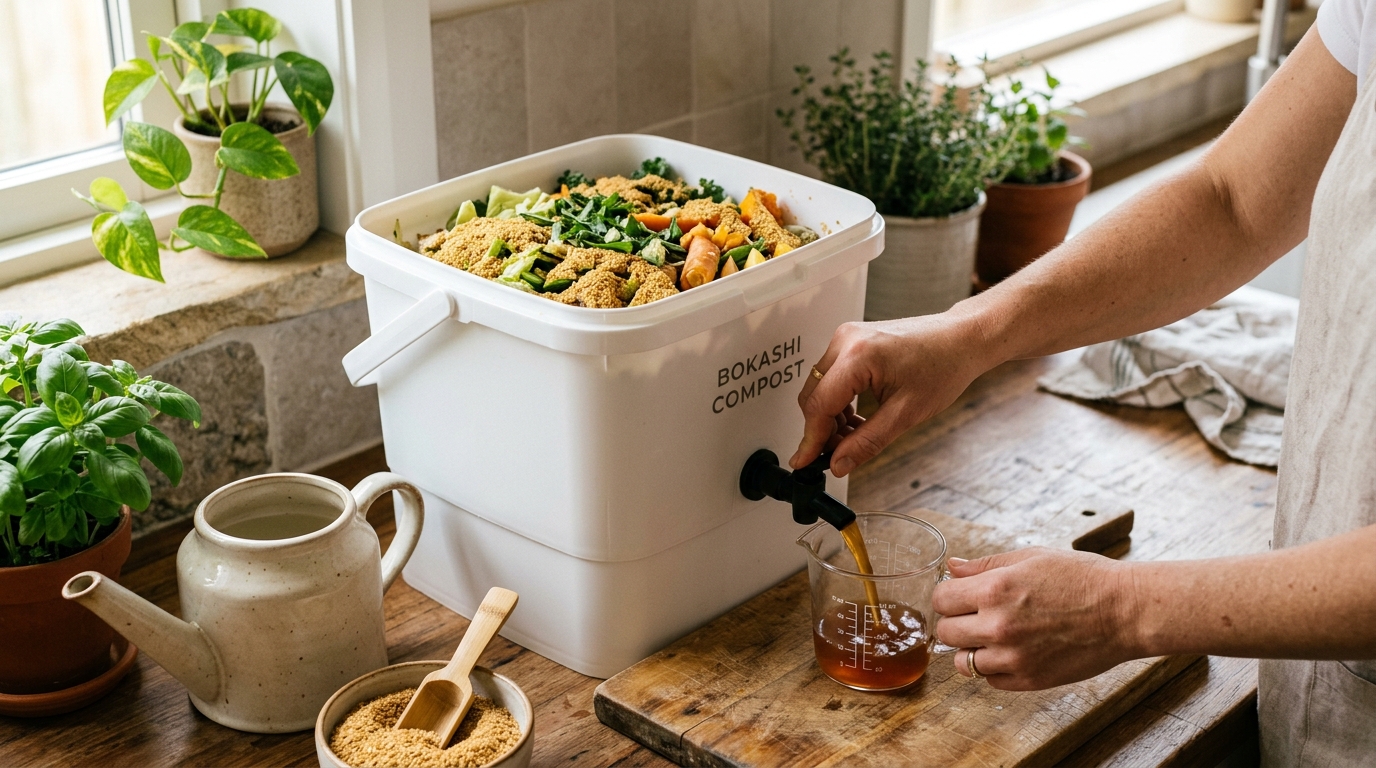
Bokashi tea is the acidic, nutrient-rich liquid by-product that drains from fermented food waste during the bokashi composting process. Because the system relies on anaerobic fermentation rather than rotting, this runoff is packed with beneficial microbes and a mild dose of nitrogen, phosphorus, and potassium.
Fresh tea usually sits at a highly acidic pH of 3 to 4, which smells and acts a lot like household vinegar. While UK hard water can soften the bite slightly, the microbes remain active and ready to condition your soil once properly diluted. As Garden Organic points out in their composting guidance, tapping off this liquid regularly is essential to keep the bin from becoming waterlogged and spoiling the fermentation.
The Golden Rule: Why Undiluted Tea Kills Plants
STOP. Do not pour this liquid straight into the sink or onto your plants.
Undiluted tea will scorch delicate roots because of its low pH, and the suspended solids can settle in pipe bends, leading to blockages in shared council drainage systems. The solution is simple: always dilute before you use it.
I learned this the hard way when I emptied a full bucket straight down the kitchen drain in a flat-share; the next morning the sink was backing up and the landlord threatened a plumber’s bill. A quick rinse with plenty of water fixed the immediate mess, but the lesson stuck – dilution is non-negotiable.
The Single Dilution Table
Diluting bokashi runoff is not an exact science, but sticking to established ratios prevents damage to both your plumbing and your plants. Here is what works for typical UK setups:
| Use Case | Dilution Ratio | Tea Amount | Water Amount | Best For |
|---|---|---|---|---|
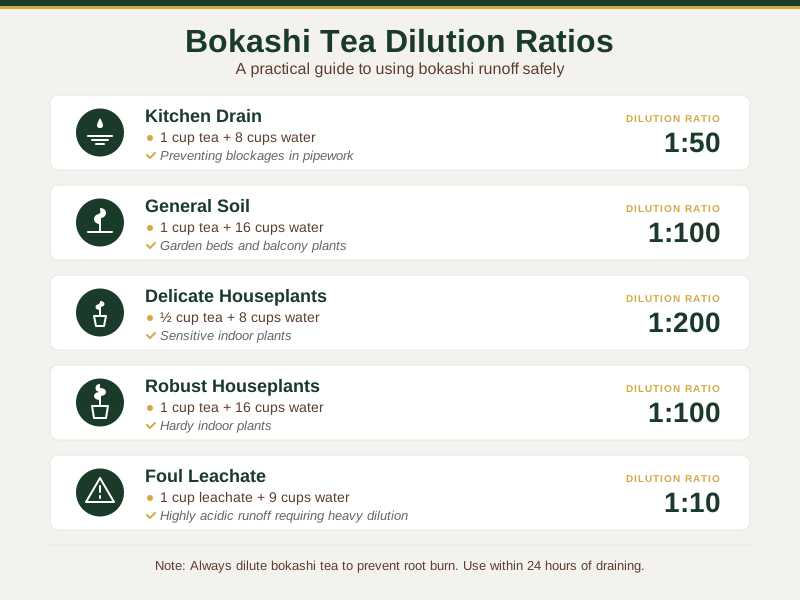
| Kitchen drain | 1:50 | 20ml (4 tsp) | 1 litre | Preventing blockages |
| General soil / garden | 1:100 | 10ml (2 tsp) | 1 litre | Garden beds, balcony plants |
| Robust houseplants | 1:100 | 10ml (2 tsp) | 1 litre | Hardy indoor plants |
| Delicate houseplants | 1:200 | 5ml (1 tsp) | 1 litre | Seedlings, ferns, orchids |
| Foul leachate | 1:10 | 100ml | 1 litre | Emergency dilution only |
*Ratios are based on the advice from Wiggly Wigglers’ UK Bokashi Tea Guide and the Royal Horticultural Society’s recommendations for applying homemade liquid fertilisers.
The higher water volume for drains (1:50) ensures any fine particles stay suspended and the acidity is neutralised enough not to corrode pipework. For soil, a gentler 1:100 gives plants a nutrient boost without the risk of root burn.
No more guessing, no more wilted basil plants.
How to Apply It: Soil, Drain, and Houseplants
Applying the diluted liquid is straightforward, but how you do it depends on your space. Here are the three best ways to use it:
Watering-can method (most common for flats)
Fill a clean watering can with the appropriate amount of diluted tea. Give each pot a thorough soak, avoiding the foliage. Repeat once a week during the growing season, and cut back in winter when plant growth slows.Direct soil drench
Pour the diluted mix straight onto the soil at the base of larger containers or raised beds. Let it soak in; there’s no need to water again immediately.Burying with bokashi solids
When you dig a trench for the pre-composted waste, the tea will leach naturally into the surrounding soil, enriching it further.
If you’re using a budget-friendly Garland Bokashi Bin (paid link) (roughly £40–£60), the tap is conveniently positioned for easy collection, though the lid can be a bit of a faff to seal tightly.
Watering Can Cheat Sheet
Most UK watering cans are 1 litre (indoor), 5 litres (small garden), or 9 litres (allotment). Here’s exactly how much tea to add:
| Can Size | For 1:100 (soil) | For 1:200 (delicate plants) | For 1:50 (drain) |
|---|---|---|---|
| 1 litre | 10ml (2 tsp) | 5ml (1 tsp) | 20ml (4 tsp) |
| 5 litres | 50ml (10 tsp / ~3 tbsp) | 25ml (5 tsp) | 100ml (~7 tbsp) |
| 9 litres | 90ml (6 tbsp) | 45ml (3 tbsp) | 180ml (12 tbsp) |
Tip: A standard kitchen teaspoon holds 5ml. A tablespoon holds 15ml. Measure carefully — it’s easier to add more tea next week than to rescue a burned plant.
UK Plant Tolerance Table
Different plants handle bokashi tea with varying degrees of enthusiasm:
| Plant Type | Tolerance | Recommended Ratio | Frequency |
|---|---|---|---|
| Tomatoes | High | 1:100 | Weekly during fruiting |
| Potatoes | High | 1:100 | Every 10 days after flowering |
| Brassicas (cabbage, kale) | Medium | 1:150 | Fortnightly |
| Roses | Medium | 1:150 | Monthly during growing season |
| Leafy greens (lettuce, spinach) | Medium | 1:150 | Fortnightly |
| Herbs (basil, parsley, coriander) | Low | 1:200 | Monthly |
| Houseplants (general) | Low | 1:200 | Monthly |
| Seedlings & cuttings | Very low | Do not use | — |
Warning: Tomatoes and potatoes are acid-tolerant and thrive on bokashi tea. Brassicas prefer neutral soil, so use a weaker dilution. Never use undiluted tea on any plant.
Seasonal Adjustment Guidance
Bokashi tea works best when plants are actively growing. In the UK climate, this means adjusting both dilution and frequency through the year:
| Season | Dilution | Frequency | Notes |
|---|---|---|---|
| Spring (March–May) | 1:150 | Every 10–14 days | Plants waking up — start gentle |
| Summer (June–August) | 1:100 | Weekly | Peak growth, maximum feed |
| Autumn (September–November) | 1:150 | Every 14 days | Growth slowing, reduce feed |
| Winter (December–February) | 1:200 or stop | Monthly or not at all | Most plants dormant; houseplants only |
The winter rule: If your flat stays above 15°C and you have grow lights or a sunny windowsill, monthly 1:200 feeding keeps houseplants ticking over. For anything outdoors or unheated, stop feeding entirely until March.
Troubleshooting: When the Liquid Smells Wrong
If your bokashi liquid smells like rotting meat or sewage rather than sharp vinegar, the bin has gone anaerobic in the wrong way and produced leachate. True bokashi tea smells pickled and sour, while foul-smelling leachate means the batch is overly wet or rotting.
Leachate needs a much stronger dilution, about 1 part leachate : 10 parts water, before it’s safe for any use.
A mouldy appearance on the liquid is usually harmless yeast; it won’t harm your plants once diluted. However, if the odour is truly sour and vinegary, it’s fine – that’s the normal bokashi scent.
Store fresh tea in a sealed jar in a cool, dark cupboard for up to a week. Beyond that, the microbial activity will shift, and the liquid can become overly sour, so it’s best to use it while it’s fresh.
Your Next Step
Dilution is the key that turns a potentially messy bucket of bokashi tea into a useful, low-cost liquid fertiliser. Remember the 1:50 rule for drains, 1:100 for most soil, and dial it back to 1:200 for delicate houseplants. Use the watering-can method for quick, mess-free feeding, and keep an eye on the smell – a vinegar-like aroma is normal, a truly putrid whiff means you’ve got leachate and need a heavier dilution.
With the safety basics sorted, you can turn that bucket of “tea” into a boost for your balcony tomatoes, your windowsill herbs, or even your council garden plot. If you want to read more about getting the basics right, have a look through the blog for more composting guides. If you’re ready to tighten up the whole bokashi setup – from the bin to the drip – Download the Free Composting Starter Checklist and make sure you’ve got every piece in the right place.
Got more questions? Feel free to get in touch – I’m always happy to help a neighbour avoid the same faff I once endured.
Related Guides
For a complete overview, see our Bokashi vs Wormery: Which Is Right for Your Flat?.
Further Reading
As an Amazon Associate I earn from qualifying purchases. The products linked above are ones I would use or recommend in my own garden setups.
Note: The dilution ratios provided are general guidance. Always verify specific requirements with a qualified professional or official source.