White Fuzz or Green Rot? How to Fix Mould in Your Bokashi Bin
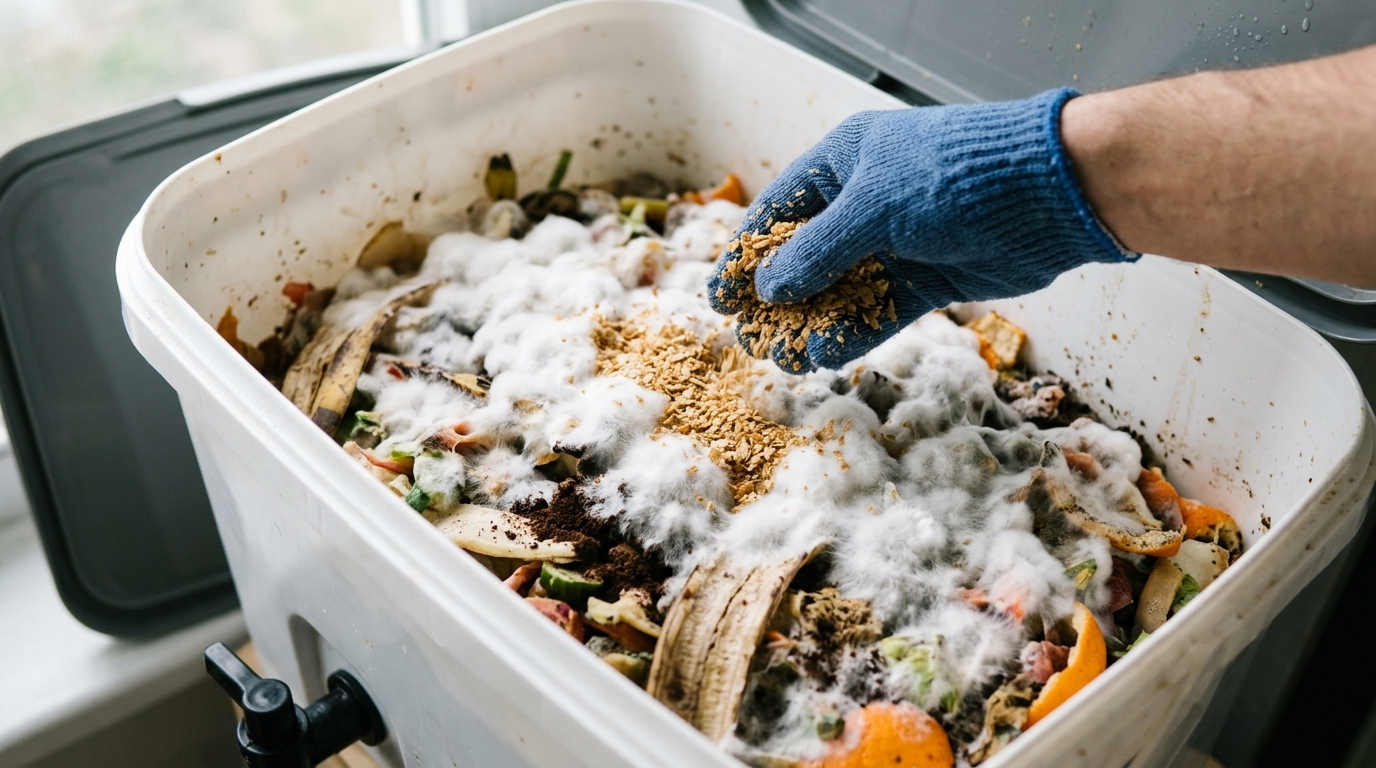
White mould on your bokashi waste in January is not the same as white mould in July. Winter mould is usually harmless yeast. Summer mould can signal overheating. Here’s how to tell the difference.
Is White Mould in a Bokashi Bin Normal?
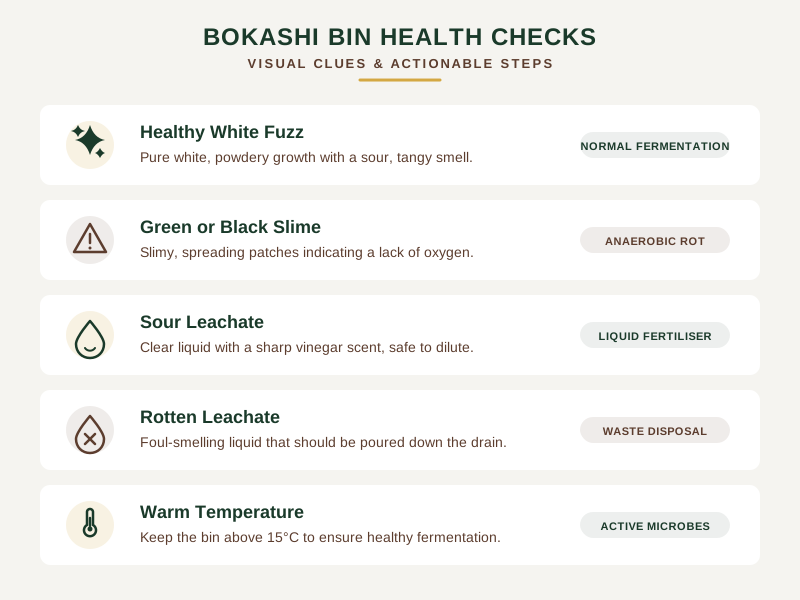
Yes, pure white, fluffy mould in a Bokashi bin is completely normal and a sign of a healthy, active fermentation process. It is an aerobic fungus driven by the lactobacillus in your bran, thriving on the surface of your food waste. If it looks a bit like cotton wool and smells sharply sour like vinegar or sauerkraut, your bin is working perfectly and the waste is safe to bury.
Bokashi relies on a specific cocktail of beneficial microbes. When they proliferate on the surface, they create this powdery white growth. It is completely safe to touch and means the fermentation is spot on. As Garden Organic notes in their composting guidance, the acidic environment created by these microbes suppresses harmful pathogens, making the process perfectly safe for a home kitchen.
A quick visual test helps confirm you are on the right track:
- Colour – pure white or off-white, resembling flour.
- Texture – dry, powdery or slightly fluffy, not wet or slimy.
- Smell – sharp, tangy, a bit like sauerkraut brine.
I first thought I’d completely mucked it up when I saw a white veil over a batch of carrot peels. I was ready to bin the lot until I remembered the sour scent and realised the microbes were just doing their job. I kept the batch, buried it in the garden, and the plants loved the extra nutrients.
Why it matters – this white “mould” is actually a pre-compost that breaks down rapidly once you dig this buried treasure into a traditional heap. It is perfectly safe and definitely not a health hazard.
When White Turns Bad: Green, Black, and Slimy Signs
When the bin’s interior becomes waterlogged or sealed too tightly, oxygen can’t reach the waste. Anaerobic conditions invite the growth of unwanted fungi and bacteria that manifest differently.
You will know things have gone wrong if you spot:
- Green or blue-tinged patches – often slimy, spreading like a film across the top.
- Black, mushy layers – dense, foul-smelling, sometimes with a faint ammonia note.
- Leachate that smells rotten – a clear sign the process has gone off-track at the bottom of the bucket.
These signs usually appear at the bottom of the bin, where the tap-drain collects liquid and where the lid’s seal might be trapping too much moisture. The Royal Horticultural Society warns that anaerobic rot produces odours that attract pests and should be dealt with promptly.
If you spot any of these, the batch is no longer safe to bury as-is. The bad mould can outcompete the beneficial microbes, and the whole bin can quickly become a breeding ground for fruit flies.
How to Fix a “Bad” Bokashi Bin
When the green slime shows up, you don’t have to start from scratch. Follow these steps – they’re cheap, use what you already have, and get the bin back to a happy state.
Do’s and Don’ts checklist
- Do remove the contaminated layer with a clean spoon or spatula.
- Don’t spread the slime to other parts of the bin.
- Do drain any leachate through the tap; collect it in a container for later use if it smells sour, otherwise discard.
- Don’t seal the lid tightly for the next 24 hours – give the microbes a breath of air.
- Do add a fresh 2 cm layer of bokashi bran over the remaining waste.
- Don’t overload the bin; aim for a maximum of 2 kg of waste per cycle.
Step-by-step rescue
- Isolate the problem – Open the lid slowly, scoop out the green or black slime into a compostable bag, and put it straight in your council food waste bin. I once tried to scrape it off with my fingers and ended up with a smelly mess on my kitchen counter – a classic faff I’d rather you avoid.
- Drain the liquid – If your bin has a tap, open it over a bucket. A sour-smelling leachate can be diluted and used as a liquid fertiliser; a foul one should be poured down the outside drain with plenty of water.
- Introduce oxygen – Using a clean garden fork or a sturdy spoon, stir the remaining waste vigorously for about a minute. This re-aerates the mass and discourages the anaerobic microbes that are causing the rot.
- Top up with bran – Sprinkle a generous handful of fresh bokashi bran (roughly £8–£12 per bag) over the top. The extra lactobacillus will aggressively outcompete the bad bacteria.
- Seal, but not airtight – Replace the lid so it rests gently on top, but leave the built-in vent open or the seal slightly cracked for the next 12 hours. Once you’re confident the smell is back to tangy, close it fully.
For more on my own composting journey and how I learned this the hard way, you can read a bit more about me and my early Bokashi disasters.
Prevention: How to Stop Mould Happening Again
The best cure is a bit of foresight. Here’s a quick checklist to keep your Bokashi bucket humming along without turning into a science experiment:
- Layer properly – Every handful of scraps should be buried under at least 2 cm of bokashi bran. This creates a dry surface that discourages unwanted fungi.
- Drain regularly – Open the tap once a week, even if the leachate looks clear. A little sour liquid is a sign of healthy fermentation; a stagnant pool invites rot.
- Mind the temperature – Keep the bin in a cupboard or under the kitchen sink above 15°C. In damp UK winters, moving it closer to a radiator can make a world of difference.
- Don’t overload – A bin that’s too full traps moisture. Aim for a maximum of 2 kg per cycle, especially in colder months.
- Wrap up for winter – In winter, wrap the bin in a simple tea-towel or place it in a cardboard box to shield it from cold drafts. The extra insulation keeps the microbes active and reduces the chance of green slime forming.
If you are struggling to keep your setup warm, check out the rest of the blog for more seasonal tips on managing indoor bins when the British weather turns bleak.
Mould ID Photo Guide
Since you cannot always see colour clearly under kitchen lights, use texture and smell to identify what you are dealing with:
| Type | Look | Feel | Smell | Verdict |
|---|---|---|---|---|
| Kahm yeast | Thin, wrinkled, white film | Dry, papery | Mildly sour, like yoghurt | Harmless — bury as normal |
| Fluffy fungal mould | Thick, cotton-wool balls | Soft, airy | Sharp vinegar or sauerkraut | Healthy — the microbes are active |
| Bad coloured mould | Green, blue, or black patches | Wet, slimy | Rotten, ammonia, or foul | Remove immediately, do not bury |
White Mould Warning Signs
White mould is usually safe, but watch for these red flags:
- Yellow or pink tinge — indicates bacterial contamination.
- Wet, slippery surface — the bin is too moist; drain liquid and add bran.
- Smell of rotten meat — the batch has gone anaerobic; start the rescue protocol above.
Seasonal Mould Diary
| Month | Typical Mould | Risk Level | Action |
|---|---|---|---|
| January–February | Thin white film (kahm yeast) | Low | Normal, keep sealed |
| March–April | Fluffy white growth | Very low | Healthy fermentation peak |
| May–June | Dense white fuzz | Low | Monitor temperature, don’t overfill |
| July–August | White fuzz + possible green spots | Medium | Check for overheating, move to cooler spot |
| September–October | Fluffy white, slowing | Low | Normal autumn slowdown |
| November–December | Thin film or none visible | Low | Microbes slow in cold, don’t panic |
Bokashi Bin Troubleshooting Guide
| Symptom | Visual Clue | Smell | Season | Action |
|---|---|---|---|---|
| Healthy Fermentation | Pure white, powdery or fluffy | Sharp, tangy, like sauerkraut | All year | Safe to bury immediately |
| Anaerobic Rot | Green, blue-tinged or black slime | Foul, rotten, ammonia-like | Any (often summer) | Remove contaminated layer and aerate |
| Leachate — Good | Clear, amber liquid | Mildly sour | All year | Dilute 1:100, use on plants |
| Leachate — Bad | Stagnant, dark liquid | Rotten eggs | All year | Pour down the drain |
| Cold Weather Stall | Bin feels cold, slow activity | Weak or none | Winter | Wrap in tea-towel, move indoors |
| Overload / Poor Sealing | Wet, dense waste; bran still visible | Weak or off | Any | Remove excess, add fresh bran, check seal |
Your Next Step
White fuzz on your Bokashi bucket isn’t a sign of failure; it’s the microbes cheering you on. If you ever spot green or black slime, act fast with the five-step rescue and you’ll be back to a smooth, sour-smelling cycle in no time. Keeping the bin well-layered, drained, and warm will stop most mould issues before they start, even during a damp British winter.
If you’re still hitting a wall or your bin simply won’t behave, feel free to contact me – I’ve likely made the exact same mistake and can point you in the right direction.
A well-layered bin rarely goes wrong, even in winter.
Related Guides
For a complete overview, see our Bokashi and Wormery Troubleshooting UK: Fixing Common Problems.
References
- Garden Organic - Composting Guidance
- Royal Horticultural Society - Composting Advice
- Agriton - Bokashi Bran Specs
Note: This information is for general guidance only. Always verify specific details with a qualified professional or official source.