Are Fruit Flies in My Wormery Harmful?
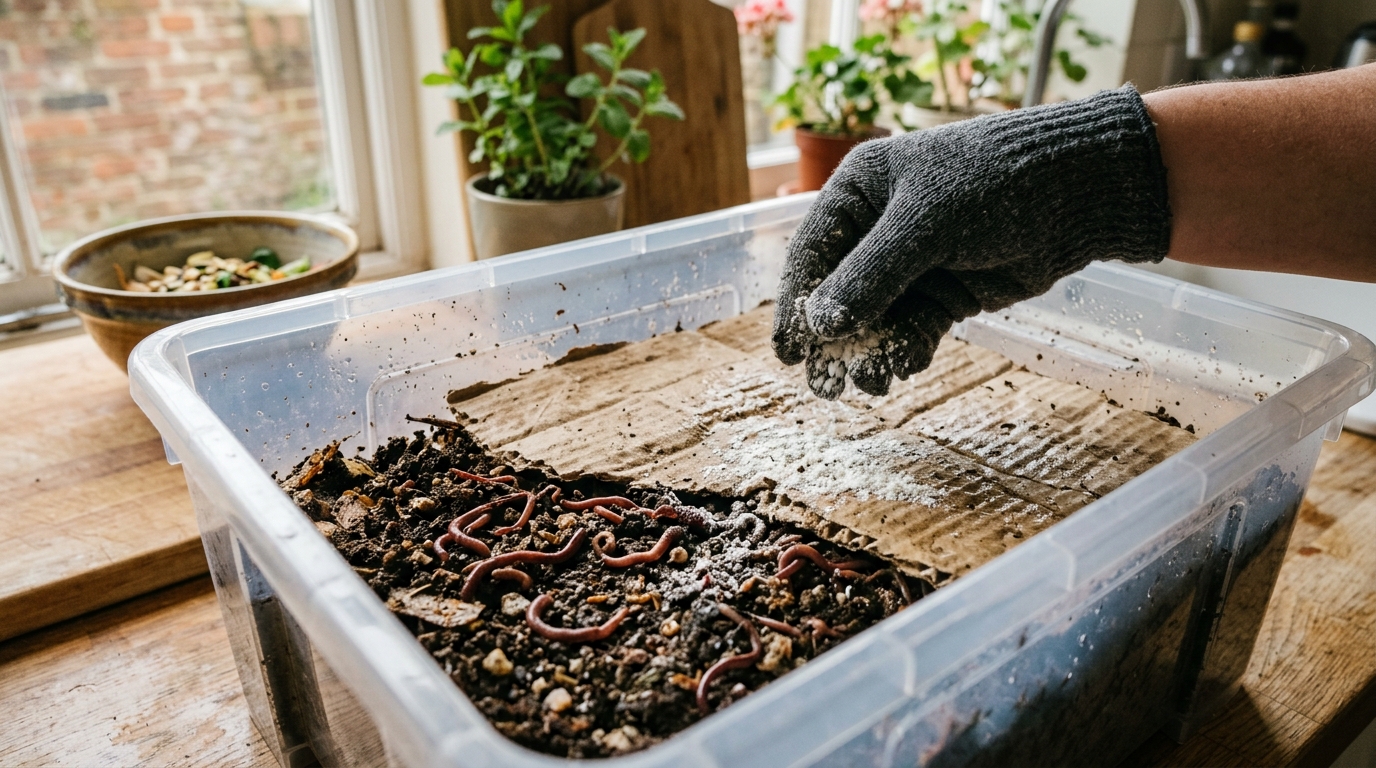
Are fruit flies in a wormery harmful? No — but they are a reliable signal that something else is wrong. Here’s the 30-second diagnosis and the three-step fix.
Why Flies Appear (It’s Never Random)
Fruit flies appear in a wormery because they are attracted to exposed, fermenting food waste in an overly wet and acidic environment. If you leave acidic scraps like fruit skins uncovered on top of soggy bedding, female flies will quickly lay eggs on the surface.
Technically known as vinegar flies, they thrive when a bin gets out of balance. The life cycle is incredibly fast: a female drops a few eggs on the fermenting bits, they hatch in a day, and the larvae feast on the same waste the worms are trying to break down.
I mucked this up early on when I overloaded my first wormery with a weekend’s worth of banana skins and didn’t bother covering them. Within 24 hours the lid was a fly-zone and the whole bin smelled like a cheap wine cellar. The flies are a symptom of an acidic, overly wet environment, not a sign that the worms are dying.
You usually get an invasion when you have a combination of:
- Acidic, wet food waste – lots of fruit, citrus, or onion skins left uncovered.
- Exposed scraps – the flies can lay eggs straight on the surface.
- Too much moisture – soggy bedding creates the perfect breeding ground.
What the Flies Are Telling You
Fruit flies don’t appear randomly. The species and behaviour point to specific problems:
| Fly Type | What You See | What It Means | Fix |
|---|---|---|---|
| Small tan fruit flies | Cloud when you lift lid | Overly acidic, wet surface | Add lime, cover food, dry bedding |
| Fungus gnats | Tiny dark mosquitoes near soil | Damp compost, overwatering | Reduce moisture, add dry browns |
| Whitefly-like insects | White clouds around bin | Rare in wormeries — check nearby plants | Isolate bin, check ventilation |
The 30-second rule: If you see flies within 48 hours of feeding, you’re either overfeeding or under-covering. If they appear after a week of no feeding, the bedding is too wet.
The Emergency Fix: Banish Them in 3 Steps
If you’re staring at a fly-filled lid, act now. This quick, three-step rescue will sort the problem out:
Cover the food
Immediately lay a thin sheet of corrugated cardboard, a few sheets of newspaper, or a damp paper towel over any exposed scraps. This physically blocks the flies from reaching the waste to lay eggs.Adjust the pH
Sprinkle a handful of garden lime (agricultural lime, not quicklime) over the top layer. Lime neutralises excess acidity and makes the environment far less attractive to fruit flies. You can pick up a small bag for roughly £5–£7 at your local garden centre. The Royal Horticultural Society regularly highlights lime as a reliable way to balance pH in compost systems.Dry it out
Add dry bedding such as shredded paper or coconut coir to soak up the excess moisture. A couple of handfuls will bring the bin back to a moist-but-not-soggy feel – think of a wrung-out sponge.
These three actions are the belt and braces approach most UK wormery keepers swear by. Once you’ve sorted the cover, lime, and dry bedding, the flies will stop laying eggs. The existing larvae will finish their short life cycle and quickly die off.
Nematode and Diatomaceous Earth Options (UK)
For persistent fly problems, biological and physical controls work without chemicals:
- Nemasys Fruit Fly Nematodes — ~£8–£12 for a small pack. These microscopic worms parasitise fly larvae in the bedding. Safe for your composting worms and harmless to humans. Available from most UK garden centres and online suppliers.
- Diatomaceous Earth (food-grade) — ~£6–£10 for 500g. A fine powder made from fossilised algae that physically damages the exoskeletons of adult flies. Sprinkle a thin layer on the surface after feeding. The Royal Horticultural Society notes diatomaceous earth is safe for organic gardening when used as directed.
- Agricultural Lime — ~£5–£7 per bag. Already mentioned above, but worth restating as the cheapest and fastest pH fix.
Note: Nematodes need moist conditions to survive — perfect for a wormery. Diatomaceous earth becomes ineffective when wet, so reapply after watering or heavy rain if your bin is outdoors.
Prevention: How to Keep Them Away for Good
A tidy wormery stays fly-free with a few basic habits:
- Layering – Always bury food under at least two to three inches of bedding. The worms love a good bit of buried treasure, and the flies simply can’t reach it.
- Waste selection – Spread out acidic foods like citrus, tomatoes, and onions over several feedings rather than dumping them all at once. A mixed diet of fruit, veg, tea bags, and coffee grounds keeps the pH stable. Organisations like Garden Organic strongly advise this kind of mixed feeding to prevent the bin from turning sour.
- Moisture control – Aim for a damp, wrung-out sponge feel. If the bin looks like a puddle, add dry paper or coir; if it’s bone-dry, lightly mist with water.
A thick bedding layer is your best defence. It blocks flies, buffers the pH, and gives the worms a comfortable home. Most of the time, a quick check of the surface each week is all the maintenance you need. If you want to see how I manage my own setups, have a look at the blog for more practical guides.
Myth-Busting: What You Need to Know
| Myth | Fact |
|---|---|
| If I have fruit flies, my worms are dying. | Worms are hardy; flies merely signal an imbalance in moisture or acidity. |
| They will eat my worms. | Fruit flies feed on the food scraps, not the worms themselves. |
| I need to throw everything away. | No – just fix the environment (cover, lime, dry bedding) and the system recovers. |
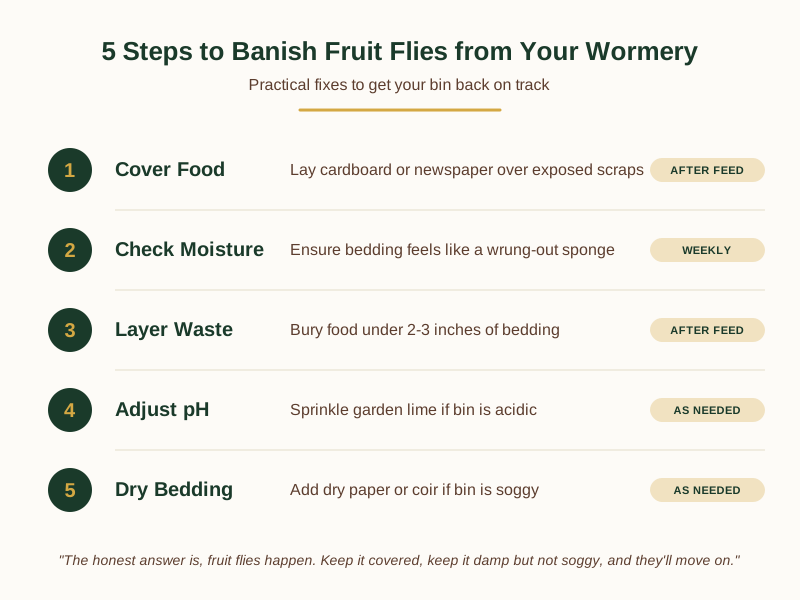
Wormery Fly Prevention Checklist
| Action | Description | Frequency |
|---|---|---|
| Cover Food | Lay cardboard or newspaper over exposed scraps | After every feed |
| Check Moisture | Ensure bedding feels like a wrung-out sponge | Weekly |
| Layer Waste | Bury food under 2-3 inches of bedding | After every feed |
| Adjust pH | Sprinkle garden lime if bin is acidic | As needed |
| Dry Bedding | Add dry paper or coir if bin is soggy | As needed |
Keep Learning
Fruit flies are a pesky but harmless side-effect of an out-of-balance wormery. By covering food, neutralising acidity with garden lime, and adding dry bedding, you can eradicate them in under an hour. Keep the bins tidy, layer food under a generous bedding blanket, and monitor moisture – the flies will stay away and your worms will stay happy.
With the fix in place, the next logical step is to set yourself up for success from day one. Download the Free Composting Starter Checklist – it walks you through the basics of feeding, bedding, and routine checks so you never have to face a fly invasion again.
Got more questions or a tricky situation? Drop me a line – I’m always happy to help a neighbour get their wormery sorted. Keep the bedding dry and the flies will stay away.
Related Guides
For a complete overview, see our Bokashi and Wormery Troubleshooting UK: Fixing Common Problems.
Where I Learned This
Note: General guidance only, verify details with a qualified professional or official source.