Can You Keep a Wormery Indoors? UK Setup Guide
As an Amazon Associate I earn from qualifying purchases. This page contains affiliate links — if you buy through them, I earn a small commission at no extra cost to you.
Roughly 40% of UK wormery owners keep their bin indoors — under the sink, in a cupboard, or on a balcony. The other 60% lose their colony to frost, rain, or foxes within the first winter.
Is It Legal and Safe to Keep a Wormery Indoors?
It is perfectly legal and safe to keep a wormery inside a UK home, as there are no council restrictions against indoor vermicomposting provided you maintain basic hygiene. The golden rule for indoor safety and odour control is strictly avoiding meat, dairy, and oily foods.
Those prohibited ingredients create a sharp, vinegary stench that mimics a rotting fish market and will quickly attract pests. If you stick to fruit and vegetable scraps, tea leaves, and a modest handful of coffee grounds, you will stay well within the safe zone. The Royal Horticultural Society (RHS) actively encourages wormeries for small spaces, noting that a well-managed bin smells pleasantly earthy, much like a damp forest floor.
Is this for you?
- Do you have a sink or utility room where you can empty a drainage tray?
- Can you commit to feeding the worms no more than a handful of scraps a day?
- Are you happy to avoid meat, fish, and dairy entirely in this system?
If you tick those boxes, you are sorted. I set mine up in the utility cupboard of my terraced house and have never had a single neighbour knock on the door to complain. For a wider look at how this compares to other indoor methods, have a read through our blog.
Choosing the Right Location (The “Neighbour-Proof” Strategy)
Room-by-Room Placement Guide
| Room | Pros | Cons | Verdict |
|---|---|---|---|
| Kitchen (under sink) | Convenient, easy to rinse | Fruit fly risk, odour near food prep | Good with tight lid |
| Utility room / cupboard | Out of sight, stable temp | Easy to forget | Best for beginners |
| Hallway | Accessible, ventilated | Neighbours may notice | Good in houses |
| Balcony | Natural airflow | Frost risk, rain exposure | Only in summer |
| Garage | Spare space | Below 5°C in winter | Avoid in winter |
| Bedroom | Warm, stable | Smell risk if overfed | Only as last resort |
Kitchen Sink – Convenience with a Caveat
Placing the wormery under the kitchen sink is tempting because the tap water is right there for rinsing trays, and you can drop scraps straight from the chopping board. The downside? Fruit flies love the damp environment, and a loose-fitting lid can let odour drift into the kitchen. If you go this route, invest in a tight-sealing lid and keep a fruit-fly trap nearby.
Utility Room – The Safe Bet for Flat Dwellers
A spare cupboard or the utility room is my favourite spot. It is out of sight, easy to empty, and you can line the base with a tray that drains into the sink. The extra distance from the living area means any faint smell stays contained. I moved my wormery there after a week of fruit-fly drama under the sink, and the problem vanished.
Garage or Under Stairs – Winter-Proofing, but Watch the Temp
If you have a garage or space under the stairs, it can be a good winter hide-out. However, UK garages can dip below 5°C in January, which slows worm activity dramatically. According to Garden Organic, tiger worms are most active between 15–25°C, making the typical British home an ideal environment, but a freezing shed is not. In my first winter, I left the bin in the shed and came back to a half-dead colony. Now I move the unit into the airing cupboard once the temperature forecast drops below 10°C.
Flat-Dweller Tip
Never place the wormery directly under a window that opens onto a shared hallway, and avoid the communal ventilation shaft – that is a fast track to neighbour complaints. Think of the bin as a quiet roommate: it needs privacy, a stable temperature, and a low-traffic zone.
Setup: The UK Starter Kit
Here is a step-by-step checklist that gets you from a box of worms to a humming, low-odour system in about half an hour.
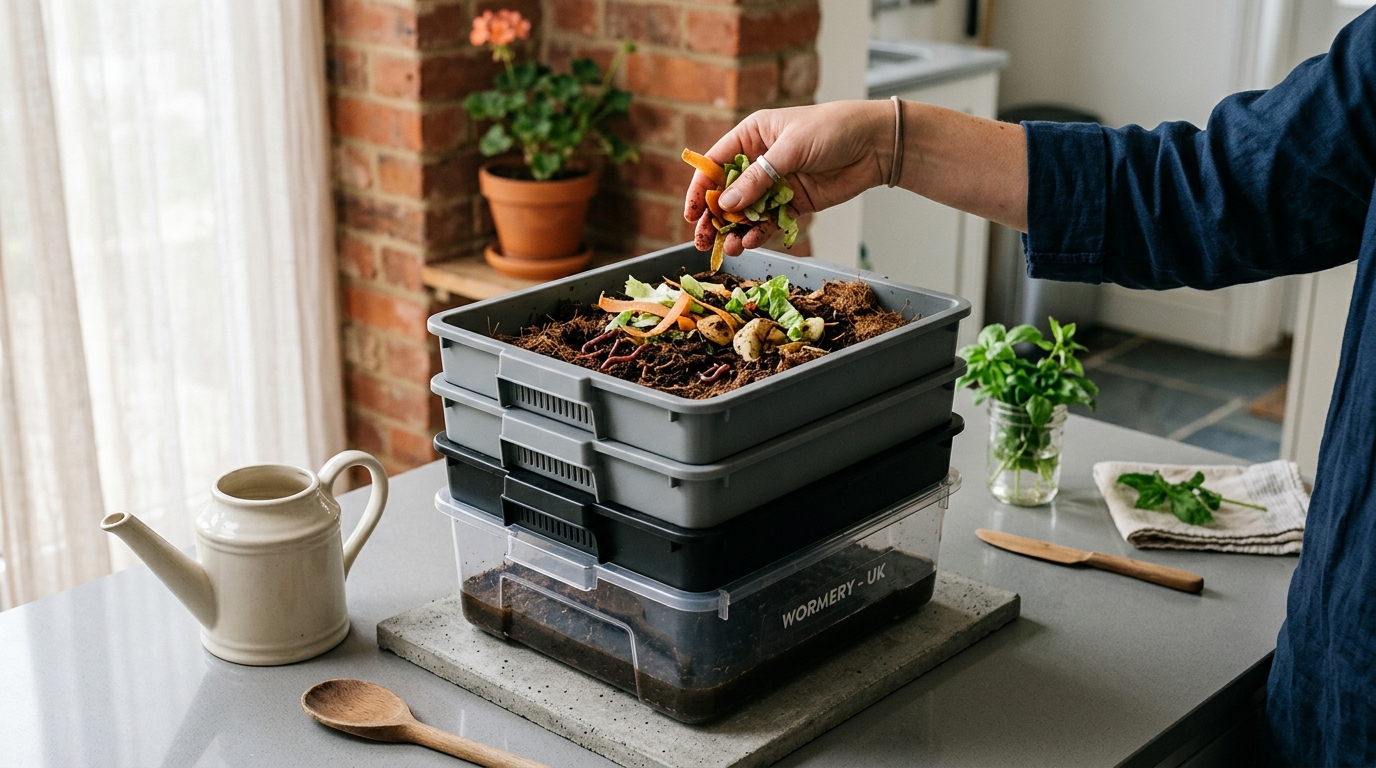
1. Choose the bin. A purpose-built wormery with a breathable lid and drainage holes is worth the investment. The Wormcity Wormery (paid link) (around £120–£150) offers a sturdy plastic body, a built-in tray, and a 5-year warranty. If you are watching the budget, the Junior Wormery (paid link) (roughly £70–£85) does the job but requires more frequent topping-up of bedding.
2. Add the bedding. I recommend re-hydrated coir brick, which you can pick up at B&Q or online for roughly £8–£12. Break it up, soak it until it feels like a wrung-out sponge, and fluff it into the bin. Coir holds moisture much better than shredded newspaper and does not attract mites.
3. Introduce the worms. Tiger Worms (Eisenia fetida) are the go-to species for indoor vermicomposting in the UK. Order a starter pack of 500-800 worms from a reputable supplier for about £10–£15. They usually arrive in a breathable bag that you can dump straight into the prepared bedding.
4. Kick-start the colony. Sprinkle a handful of garden soil or a scoop of existing compost over the bedding to provide the grit and microbes the worms need. Then add a small pile of vegetable scraps, burying it under a few centimetres of coir to deter pests. This gives them a safe, familiar environment to start feeding.
5. Set up the drainage. Place a shallow tray underneath the bin and line it with a piece of old newspaper to catch any stray debris. Run a short length of hose to the kitchen sink or a bucket for easy emptying. You want to drain the liquid runoff regularly so the bin does not become waterlogged.
6. Seal and settle. Close the lid securely to keep the moisture in and the flies out. Give the bin a gentle shake to aerate the bedding, then leave it completely alone. Let the worms settle into their new home for at least 24 hours before you give them their first proper feeding.
Troubleshooting: Common UK Problems
Odour – The Silent Killer
A whiff of sour, banana-like smell usually means you have over-fed or the bin is not getting enough air. The quick fix: stop feeding for two days, stir the bedding to re-introduce oxygen, and add a thin layer of dry shredded newspaper on top. The worms will absorb excess moisture, and the smell will disappear.
Leaking – When the Tray Turns Into a Puddle
Leaks often stem from a blocked drainage hole or an uneven bin. Check that the tray sits level, and clear any food debris from the holes. A thin piece of fine mesh (like a tea-bag filter) under the tray can catch stray bits and prevent clogs. I once mucked it up by using a cracked plastic tub and ended up with a soggy kitchen floor – swapping to a built-in tray solved it instantly.
Fruit Flies – The Unwanted Guests
Exposed food scraps are the main attractor. Bury every bite under at least 5cm of bedding and keep the lid snug. A small jar of apple-cider vinegar with a drop of washing-up liquid works as a trap, but the real solution is consistent burying. My first batch of fruit flies vanished after I started covering the scraps with extra coir each time.
Winter Survival – Keeping Worms Happy When It Is Frosty
When the ambient temperature drops below 10°C, worms slow down and may become dormant. Move the bin to a warmer nook – the airing cupboard, a heated hallway, or even a sunny windowsill (but not a direct summer heat source). You can also wrap the bin in an old fleece blanket for extra insulation. You do not need a heater; just a stable, above-10°C spot will keep the colony alive through the winter months.
| Problem | Typical Cause | Quick Fix |
|---|---|---|
| Odour | Over-feeding / poor airflow | Pause feeding, stir bedding, add dry newspaper |
| Leaking | Blocked drain / uneven bin | Clear holes, level tray, add mesh liner |
| Fruit flies | Exposed scraps | Bury food, tighten lid, use vinegar trap |
| Winter slowdown | Temp < 10°C | Relocate to warmer area, add fleece wrap |
Seasonal Fruit Fly Prevention Checklist
| Season | Risk Level | Prevention Tactic |
|---|---|---|
| Spring | Low | Start the year with fresh bedding; bury all scraps |
| Summer | High | Feed smaller amounts more often; keep a vinegar trap active |
| Autumn | Medium | Remove fallen fruit promptly; check lid seal after temperature drops |
| Winter | Low | Flies dormant; focus on moisture instead |
Summer protocol (when risk is highest):
- Freeze veg scraps for 24 hours before adding — this kills fly eggs.
- Add a 2cm “blanket” of dry shredded paper after every feed.
- Empty the liquid tray weekly; stagnant liquid attracts flies.
- Keep a small dish of apple cider vinegar with a drop of washing-up liquid near the bin.
Top 3 Indoor Wormeries for UK Homes
1. Wormcity Wormery – Best Overall (Premium)
The Wormcity is a UK-made, double-wall plastic unit with a vented lid, a removable tray, and a 5-year warranty. It is built to withstand the occasional bump in a flat’s hallway and the occasional splash from a leaky tap. The price is a bit up there – roughly £120–£150 – but the durability, airtight lid, and the fact that it is manufactured locally make it worth the extra tenner. I have had mine for two years; the worms are happy, and the bin has never leaked.
2. Junior Wormery – Best Budget Option
If you are skint on the first go, the Junior Wormery (around £70–£85) does the job. It is a single-wall plastic box with a simple lid and a basic drainage tray. The trade-off is that the lid is not as tight, so you need to be diligent about covering food and checking for leaks. It is a bit hit and miss for larger families, but for a single flat dweller, it is a solid starter.
3. Maze Worm Farm (paid link) – Best for Small Spaces
The Maze Worm Farm is a compact, stackable system that fits under a sink cabinet or on a narrow balcony shelf. It is made of clear acrylic, so you can watch the worms at work – a neat party trick for kids. The main downside is the seal; the lid can let a faint scent escape if you do not keep the bedding well-moistened. I keep mine in the utility cupboard with a small piece of felt under the lid, and it has been odour-free for months.
All three models are available from standard UK suppliers. If you are after a cheaper entry point, the Junior Wormery is the best value choice, but remember you will need to monitor it a bit more closely for moisture and airflow.
Common Questions
Can I put meat or fish in an indoor wormery?
No. Standard wormeries cannot handle meat, fish, or dairy because those ingredients cause nasty smells and attract pests. If you want to compost meat waste indoors, you are better off looking at a bokashi bucket instead.
Will fruit flies infest my kitchen?
Only if you leave food exposed on the surface of the bedding. Bury every scrap under a few centimetres of coir or soil and keep the lid snug. A simple vinegar trap can mop up any stragglers, but the real fix is proper burying.
How do I harvest the worm castings without making a mess?
I use the “light method” which is a lot less of a faff than picking them out by hand. Tip the bin onto a shallow tray, shine a bright lamp on one side, and the worms will naturally burrow away from the light. After 15-20 minutes you can easily scoop off the top layer of fresh compost.
Before You Buy
You now have the basics: a legal, safe, and neighbour-proof spot; a starter kit that will not break the bank; and a troubleshooting cheat sheet for the inevitable hiccups. The next logical step is to double-check that your flat meets the temperature and space requirements before you click buy. That is exactly what the Free Composting Starter Checklist helps you do – a quick, printable guide that walks you through the must-have items, the ideal location, and a simple cost calculator.
Download the Free Composting Starter Checklist and get your indoor wormery up and running without the faff.
If you have got any lingering doubts, feel free to get in touch – I am always happy to share what has worked (and what has not) in my own flat-friendly setups. Don’t put your wormery on a radiator, near a boiler, or in direct afternoon sun. Worms die faster from heat than from cold. If your flat stays above 10°C, they’ll outlive your houseplants.
Related Guides
For a complete overview, see our How to Set Up a Wormery for the First Time UK.
Renting in the UK?
Your landlord cannot reasonably refuse a sealed indoor wormery. It is not a pet, does not violate tenancy clauses about animals, and produces no more smell than a houseplant. That said:
- Check your tenancy agreement for specific composting restrictions (rare, but some blocks ban it).
- Tell your landlord proactively — a quick email explaining it’s a sealed bin with no smell risk avoids neighbour complaints reaching them first.
- Keep it in your own space — communal hallways are a no-go for fire safety and neighbour relations.
- Have an exit plan — if you move, you can gift the worms to a friend or bury them in a park compost bin within 24 hours.
References
- Royal Horticultural Society (RHS) - Composting
- Garden Organic - Vermicomposting Guide
- Recycle Now - Home Composting
As an Amazon Associate I earn from qualifying purchases. The products linked above are ones I would use or recommend in my own garden setups.
Note: General guidance only, verify details with a qualified professional or official source.