What Can You Put in a Bokashi Bin? The UK Flat-Dweller's Guide
As an Amazon Associate I earn from qualifying purchases. This page contains affiliate links — if you buy through them, I earn a small commission at no extra cost to you.
Can you put leftover roast chicken, mouldy cheese, and yesterday’s tea bags in the same bucket without creating a health hazard?
Yes — provided the bucket is a bokashi bin. The sealed, anaerobic environment ferments rather than rots, which means the bacteria handle proteins and fats that would turn a standard compost heap into a rat buffet. This guide lists exactly what goes in, what stays out, and what falls into the grey area where a quick rinse makes all the difference.
The Full Yes List: What Bokashi Microbes Actually Want
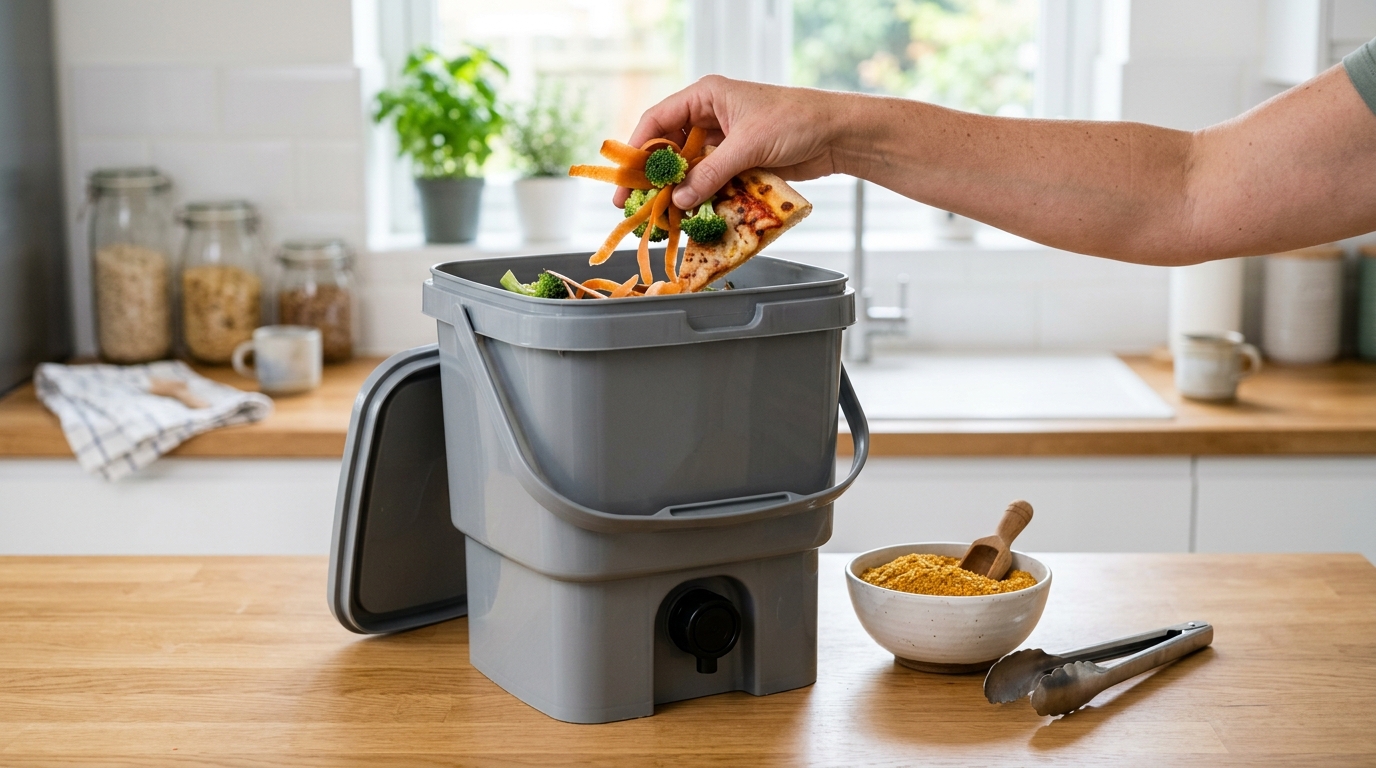
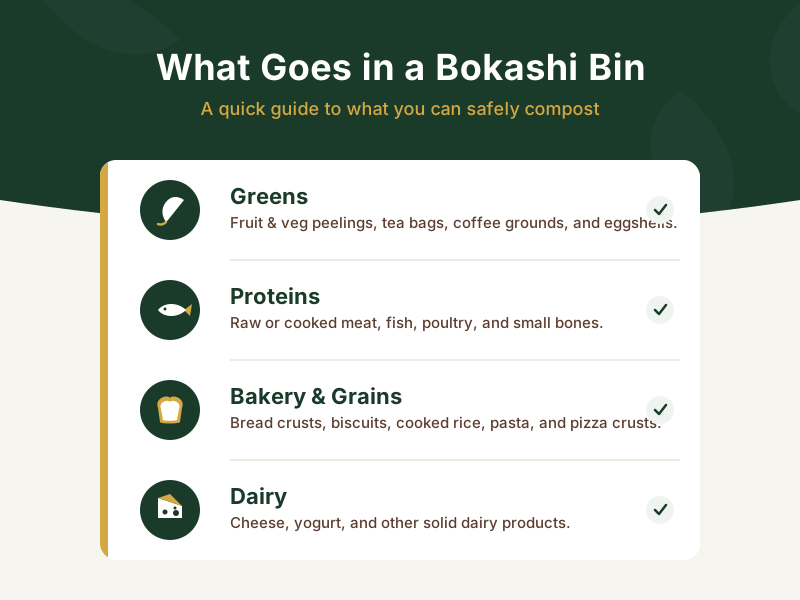
You can put almost any food waste into a bokashi bin, including fruit and veg peelings, cooked and raw meat, dairy, bread, and even small bones. As long as the food is not completely drenched in oil or already covered in green mould, the bokashi microbes will successfully ferment it. Because bokashi is an anaerobic fermentation process rather than traditional composting, the high acidity handles proteins and fats that would normally putrefy and attract rats. You just need to ensure you add a good sprinkle of inoculated bran over every layer to keep the bacteria active. Here is the definitive list of what works well. Anything on this side of the line will ferment happily, giving you that sour, pickled smell rather than a rotting stench.
- Greens (the easy stuff)
- Fruit and veg peelings, cores, tops, ends – think apple skins, carrot tops, potato eyes.
- Tea bags (remove the staple and ensure they are plastic-free) and coffee grounds.
- Crushed eggshells – they add a dash of calcium.
- Proteins & Dairy
- Raw or cooked meat, fish, poultry, and small bones. Bokashi’s lactobacillus bacteria break down proteins and fats just fine.
- Cheese, yogurt, milk powder, and butter – as long as they’re not swimming in grease.
- Bakery & Grains
- Bread crusts, plain biscuits, cooked rice, pasta, and pizza crusts – yes, even that slice of pepperoni pizza.
- Miscellaneous
- Small amounts of herbs, leafy greens, and even a few bits of cooked beans.
Why it works: The bran you sprinkle in after each layer is inoculated with bokashi microbes that “pickle” the waste, turning fats and proteins into a stable, odour-less slurry. I once tried to dump a whole roast chicken carcass into a standard compost bin and ended up with a mouse problem; the same chicken went straight into a bokashi bucket and the bin stayed sealed and smell-free. According to Garden Organic, this fermentation process is exactly what stops the usual putrefying bacteria from taking over.
Quick tip: If you’re on a tight budget, the Garland Bokashi Bin (paid link) (roughly £40–£60) does the job, though the lid can be a bit of a faff – I mucked it up and learned that the hard way when my very first batch leaked onto the kitchen floor.
The Hard No List: What Will Kill the Fermentation
These items are the usual suspects that cause smells, mould, or a busted seal.
- Grease & Oil – Butter, cooking oil, and fatty sauces float on top, preventing the lid from sealing. Grease and oil are the biggest culprits for a bin that has gone anaerobic in a bad way.
- Diseased Plant Material – While bokashi handles most waste, rotting, heavily mouldy veg can introduce unwanted pathogens that compete with your good bacteria.
- Non-Food Waste – Plastic, glass, metal, and pet waste have no place in a kitchen fermentation system.
If you ever notice a sharp, rotting-meat whiff rather than a pickled smell, check whether any oily residue slipped in – that is usually the cause.
The Grey Area: Cooked Food, Bones, and Citrus
Not everything that looks off-limits is actually a problem, but there are a few nuances to keep things running smoothly.
- Cooked leftovers – Pasta, rice, stew, and pizza are fine provided they aren’t swimming in oil or sauce. A quick rinse under cold water removes excess grease and keeps the fermentation balanced.
- Bones – Small fish or chicken bones tumble in without issue. Large marrow bones (like a lamb shank) are too hard for the microbes to break down quickly and should be left out.
- Citrus – Contrary to some older guides, a handful of orange or lemon peels won’t stop the process. They may slow it slightly, but the bacteria handle the acidity just fine.
Quick Tip: Give the waste a quick rinse if it’s drenched in sauce; a splash of water in the bin helps dilute the oil and keeps the lid sealing properly.
UK Menu Test
| Meal | Safe to Bokashi? | Notes |
|---|---|---|
| Sunday roast chicken | Yes | Remove large bones, scrape off excess gravy |
| Full English breakfast | Yes | Bacon rinds fine; avoid greasy hash browns |
| Spaghetti Bolognese | Yes | Rinse off oily sauce first |
| Fish and chips | Caution | Chips are fine; batter soaked in oil should be limited |
| Cheese toastie | Yes | Scraps of cheese and bread are ideal |
| Mouldy cheese | Yes | White or blue mould is fine; green/black mould, bin it |
| Tea bags | Yes | Remove staple, check plastic-free |
| Curry leftovers | Yes | Rinse off oil; avoid coconut cream-heavy sauces |
Rescue Protocol: When You’ve Put the Wrong Thing In
- Stop adding waste immediately and seal the lid.
- Add a double handful of fresh bran to overwhelm any bad bacteria.
- Drain all liquid through the tap to reduce moisture.
- Wait 48 hours without opening. If the smell is still rotten, empty the bin and restart.
- Prevention: When in doubt, rinse oily food under the tap before it goes in.
Why It Works (Without the Chemistry Degree)
Bokashi is an anaerobic system – it works without oxygen, unlike a wormery or a garden compost heap that relies on aerobic breakdown. The lactobacillus bacteria in the bran convert sugars, proteins, and fats into a fermented, pickled slurry. The result is a sour smell that’s more like sauerkraut than rotting rubbish, and the process is completely pest-proof because the sealed bucket offers no invitation to rats or flies. WRAP (Waste and Resources Action Programme) notes that diverting this kind of heavy food waste from landfill significantly reduces household methane emissions.
You do not need worms for this – the microbes do all the heavy lifting. I once tried to add a worm bin on top of my bokashi setup, only to discover the worms died off from the low-oxygen environment. Stick to one system at a time. If you want to read more about my various composting disasters, I talk about them on my About page.
What Happens After the Bin Is Full
Once your bin is full (usually after 7–10 days per layer), it’s time to deal with the fermented waste.
- Drain the bokashi tea – Open the tap on the side of the bucket and collect the liquid in a bottle. Dilute it roughly 1:100 with water before using it as a fertiliser for houseplants, as neat tea will burn roots. (See our detailed guide on Bokashi Tea.)
- Bury the solid “pickles” – Scoop the contents into a pot of potting mix, a balcony raised bed, or a small garden patch. Cover with at least 10 cm of soil and keep it moist. Within a few weeks, the buried treasure turns into rich, crumbly compost ready for planting.
- Flat-friendly option – If you have no garden, use a large, opaque bin bag filled with old compost buried under a balcony planter. The soil contains the microbes needed to finish breaking down the fermented waste while keeping it contained.
The whole burying step is not rocket science: dig a shallow trench (or a pot), drop the fermented waste in, and cover. No heavy shovelling required, and the end product is safe to use on any indoor herb garden.
Quick check: Now that you’ve got the list of what goes in and out, why not make sure your whole setup is spot on? Download the Free Composting Starter Checklist to double-check every step before you start.
Bokashi Bin: Acceptable vs Unacceptable Items
| Category | Acceptable Items | Unacceptable Items |
|---|---|---|
| Greens | Fruit/veg peelings, tea bags, coffee grounds, eggshells | Diseased plant material, rotting veg |
| Proteins & Dairy | Raw/cooked meat, fish, poultry, small bones, cheese, yogurt | Fatty sauces, swimming in grease |
| Bakery & Grains | Bread crusts, biscuits, cooked rice, pasta, pizza crusts | Non-food waste |
| Miscellaneous | Herbs, leafy greens, cooked beans | Plastic, glass, metal, pet waste |
| Liquids | Bokashi tea (diluted) | Neat liquid, oil, grease |
| Bones | Small fish or chicken bones | Large marrow bones (lamb shank) |
| Citrus | Orange/lemon peels | None (technically acceptable but may slow process) |
Keep Learning
You now have a clear picture of the foods that are safe, the items that will sabotage your bin, and the simple steps to finish the fermentation. The biggest win for flat-dwellers is that you can toss meat, dairy, and cooked leftovers without inviting rats or a nasty smell – just seal, press, and let the microbes do their thing. The final burying stage is easy, whether you have a balcony pot or a neighbour’s garden to share.
If you’re ready to set up your own system, the next logical step is to make sure you’ve got all the right gear and a solid routine. You can browse through the blog for more specific guides, or just grab our free checklist which walks you through the whole process, from choosing a bin to handling the tea, so you can start composting with confidence. Download the Free Composting Starter Checklist and get your flat-friendly bokashi running in no time.
Once you know what goes in, the rest is just habit.
Related Guides
For a complete overview, see our How to Set Up a Bokashi Bin UK: Step by Step for Beginners.
Further Reading
As an Amazon Associate I earn from qualifying purchases. The products linked above are ones I would use or recommend in my own garden setups.
Note: This guide provides general information on bokashi composting. Always verify specific local regulations and consult a qualified professional or official source for detailed advice.