How to Set Up a Bokashi Bin UK: Step by Step for Beginners
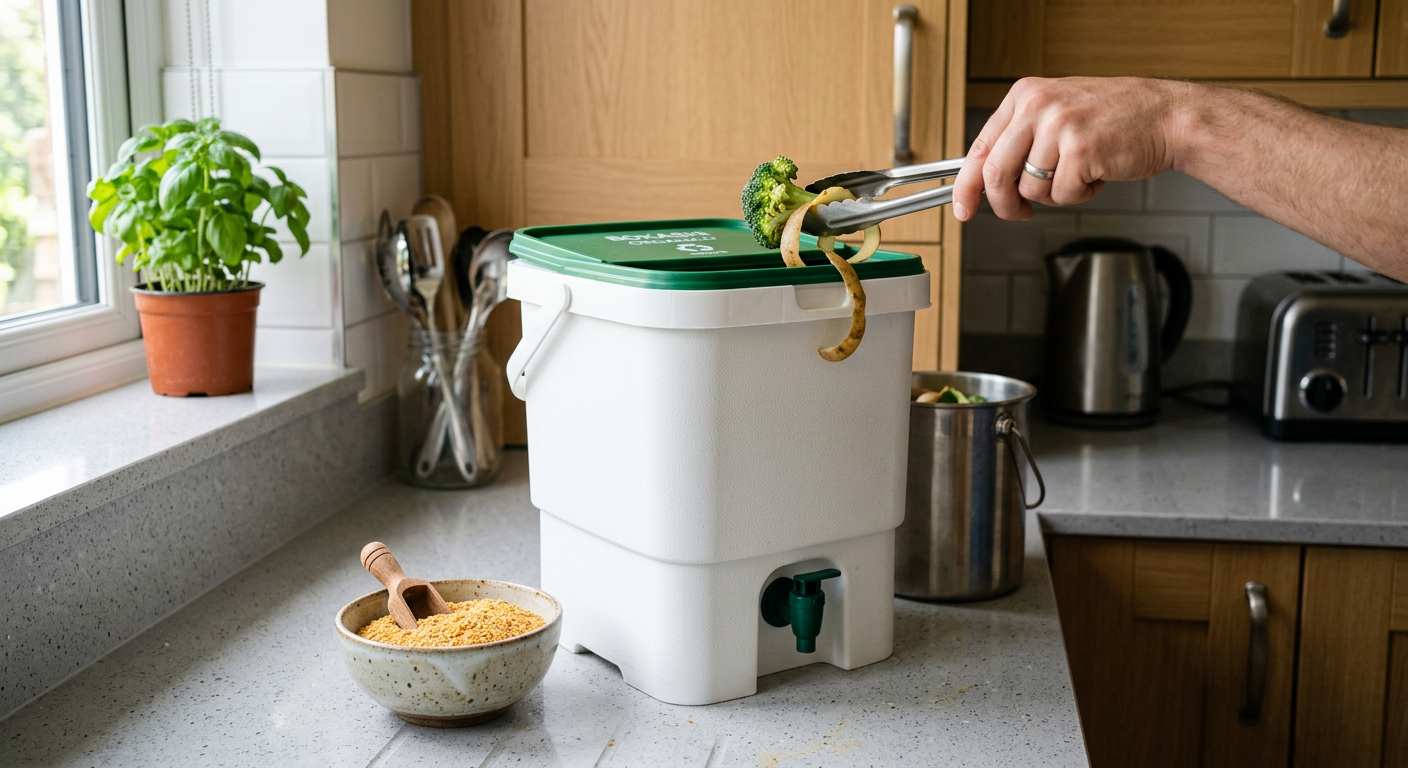
As an Amazon Associate I earn from qualifying purchases. This page contains affiliate links — if you buy through them, I earn a small commission at no extra cost to you.
I tried to set up my first bokashi bin on the kitchen windowsill in direct July sunlight. Within three days the bran had dried out, the seal warped, and the whole batch smelled like a pub bin on Sunday morning.
That mistake taught me the most important lesson about bokashi: location matters more than the bin itself. Get the spot right — cool, stable, and out of direct sun — and the rest is straightforward. This guide walks you through the setup I wish I’d had, from choosing a bin to burying your first batch.
Step 1: Choosing Your Bin and Location
The biggest mistake flat-dwellers make is buying a giant bin they cannot fit, or worse, plonking it on the carpet and worrying about leaks. Here is what works for most UK flats and rentals:
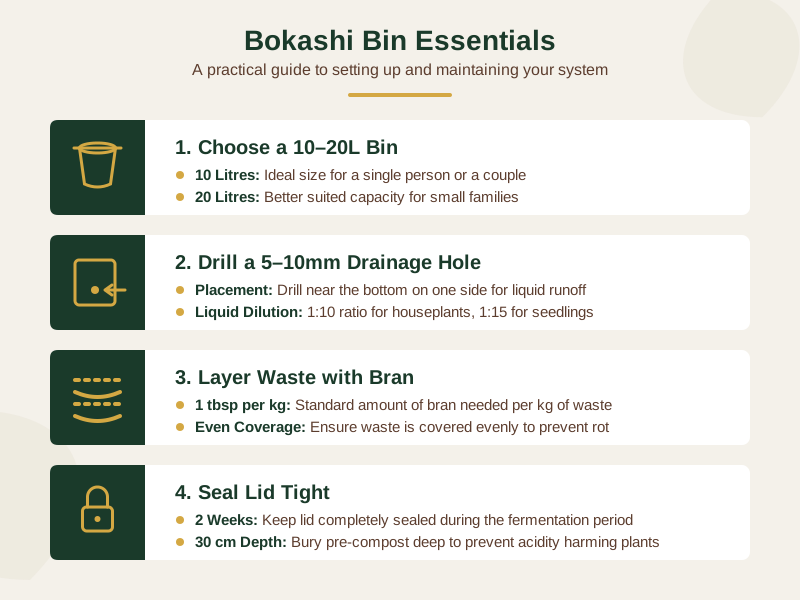
- Bin size – 10 litres is spot on for a single or couple; 20 litres gives a little breathing room for a small family. Anything larger becomes a bit of a faff to manoeuvre up stairs.
- Placement – Keep it level, away from direct heat sources. My favourite spot is the utility cupboard under the sink; the residual warmth helps the microbes stay active during a cold British winter, and it is out of the way of the main kitchen traffic.
- Rental tip – Slip a shallow tray (a recycled pizza box or a cheap plastic tray from Wilko) underneath the bin. It catches any stray drips and protects the floor – a simple belt-and-brace solution that landlords will thank you for.
If you are hunting for a bin, I cover various setups over on the blog. My go-to on a budget is the Garland Bokashi Bin (paid link) – expect to pay roughly £40–£55. It is durable, and while it skips the built-in tap, you can easily add a simple spigot later if you fancy it.
Step 2: The Critical Setup – Drilling & Bran
Most guides gloss over the drainage hole, but it is the difference between a tidy system and a leaky nightmare. Here is the step-by-step:
- Mark the spot – About 5 mm from the bottom on one side, just above where the bin will sit on the tray. This position lets the liquid collect without the bin sitting in its own runoff.
- Drill a 5–10 mm hole – A standard wood-drill bit does the trick. I placed a piece of cardboard under the bin while drilling to protect the floor – a tiny precaution that saved me a lot of hassle.
- Fit a spout (optional) – If you have bought a bin with a tap, screw it in now. Otherwise, a simple rubber plug will keep the hole sealed when you are not draining.
- Bokashi bran – This is the inoculated wheat bran that carries the effective microorganisms. Sprinkle about a tablespoon per kilogram of waste. The bran not only inoculates but also absorbs excess moisture, keeping the system from going too wet.
According to Garden Organic, ensuring adequate drainage is essential because the process relies on keeping the waste from sitting in its own liquid, which can cause the bin to go anaerobic in the wrong way and smell awful. The liquid you collect can be diluted 1:10 with water and used on houseplants or a balcony herb pot. It is not a miracle cure, but it does give a nice nutrient boost.
Step 3: Layering and Sealing
Now the fun part – turning everyday scraps into buried treasure. Follow this routine each time you add waste:
- Add a layer of waste – Roughly 2–3 cm deep. Anything you would normally toss in the bin works: cooked rice, cheese rinds, fish heads, even the occasional slice of cake.
- Sprinkle bran – About 1–2 tablespoons over that layer. The key is to cover the waste evenly; the bran distributes the microbes.
- Press down firmly – A wooden spoon or the back of a small kitchen trowel does the job. Removing air pockets is crucial – the process is anaerobic, so you want as little oxygen as possible.
- Seal the lid tight – A snap-on lid with a good gasket keeps the system airtight. If you hear a faint hiss when you close it, you have done it right.
- Repeat – Keep adding layers until the bin is full, then cap it for the fermentation period.
What NOT to put in – Large bones (they will not break down), diseased plant material, or anything that smells strongly of chemicals like cleaning products. Those can upset the microbial balance.
A quick note from a reader who tried to toss a whole chicken leg into the bin: the leg never broke down and caused a blockage in the drainage hole. The lesson? Cut up anything over 5 cm before it goes in.
Step 4: The “Dig and Bury” Phase
Your bin will be full in a few weeks, and the waste will have a sour, pickled aroma – that is a good sign. Here is what to do next:
- Wait two weeks – This gives the microbes time to finish the pickling. The lid stays sealed; you can still collect the liquid runoff during this period.
- Bury the fermented waste – Dig a trench about 30 cm deep. In a small garden, a pot of tomatoes or a raised bed works fine. If you do not have a garden, a wormery is a perfect alternative – just tip the fermented material into the worm bin and let the worms finish the job.
- Do not use it as a top dressing – The material is still highly acidic; burying it lets it integrate with the soil where microbes finish the breakdown.
The Royal Horticultural Society (RHS) advises that fermented bokashi waste must be buried or added to a secondary composting system, as it is far too acidic to be applied directly to plant roots. I once mucked it up by spreading the fermented mix straight onto my balcony herbs. The plants wilted for a week. Burying it solved the issue and gave my tomatoes a noticeable growth spurt within a fortnight.
What If Something Goes Wrong?
To fix common bokashi problems, you usually need to adjust your moisture levels, add more bran, or secure the bin’s airtight seal. If your bin smells like rotting meat rather than sweet vinegar, air is getting in or the waste is too wet. Here is the quick-fix list:
- Smells – If you catch a whiff of sour rot, the bin is not sealed properly. Add another sprinkle of bran, press the waste down harder to remove air pockets, and check the lid gasket for gaps.
- Flies – An airtight lid is your best defence. A simple piece of fine mesh over the vent can also do the trick if fruit flies are finding their way in during summer.
- Liquid leaks – Ensure the drainage hole is not blocked by debris and that the bin sits level on the tray. Tilted bins will pool liquid inside, creating a mess.
- Runoff too strong – Dilute it more. A 1:15 ratio is safe for delicate houseplants.
Can I put cooked food in a bokashi bin? Yes — cooked leftovers, including meat, fish, dairy, and small bones, are entirely fine. The anaerobic microbes thrive on them, which is why bokashi is the only indoor system that handles those items without turning your flat into a stink bomb.
Do I need a garden to use a bokashi bin? No — you just need somewhere to bury the fermented waste or a wormery to finish the process. A large soil-filled planter, a balcony compost box, or a community allotment works perfectly well for flat-dwellers.
Bokashi Bin Setup Guide
| Feature | Recommendation | Notes |
|---|---|---|
| Bin Size | 10 Litres | Ideal for single person or couple |
| Bin Size | 20 Litres | Better for small families |
| Drainage Hole | 5–10 mm | Drill near bottom on one side |
| Bran Amount | 1 tbsp per kg | Covers waste evenly |
| Liquid Dilution | 1:10 | Safe for most houseplants |
| Liquid Dilution | 1:15 | Safer for seedlings |
| Fermentation Time | 2 Weeks | Keep lid sealed during this period |
| Burying Depth | 30 cm | Prevents acidity from harming plants |
Your First 14 Days
| Day | Action | What to Watch For |
|---|---|---|
| 1 | Set up bin, add first layer of waste + bran | Lid seals tight, no gaps |
| 2–3 | Continue adding daily scraps, press down each time | Liquid starts collecting in tray |
| 4–7 | Maintain rhythm: waste, bran, press, seal | Smell should be faintly sour, not rotten |
| 8–10 | Bin approaching full — reduce additions | Check drainage hole isn’t blocked |
| 11–14 | Seal lid, stop adding, drain liquid every 2–3 days | White mould is good; black mould means air got in |
UK Buyer’s Cheat Sheet
| Bin | Retailer | Price | Dimensions (H×W×D) | Best For |
|---|---|---|---|---|
| Garland Bokashi | Amazon UK | £40–£55 | 28 × 22 × 22 cm | Budget starter |
| Hozelock Bokashi | B&Q / Amazon UK | £50–£65 | 30 × 24 × 24 cm | Reliable seal |
| Skaza Organko 2 | Wiggly Wigglers | £80–£100 | 32 × 26 × 26 cm | Premium kitchen |
Your Next Step
You have now got the whole kit and caboodle: pick a suitably sized bin, drill that crucial drainage hole, layer waste with bran, seal it tight, and when it is full, dig a shallow trench or tip it into a wormery. The system is straightforward enough that you can have it up and running before the next council food-waste collection.
Getting started is the hardest part; once you have got the bin humming, the rest is practically hands-off. Keep an eye on the seal, collect the liquid for your plants, and enjoy the quiet satisfaction of turning kitchen scraps into buried treasure without a single whiff of rot.
If you want to read a bit more about how I learned all this the hard way, check out my about page, or if you are completely stuck on a leaking tap or a smelly bin, drop me a message via the contact form.
Related Guides
Dig deeper into specific topics:
- Best Bokashi Bin UK: Top Picks for Small Kitchens
- What Can You Put in a Bokashi Bin? UK Beginner’s Guide
- Bokashi Composting in Winter UK: What You Need to Know
- What to Do When Your Bokashi Waste Is Ready
References
As an Amazon Associate I earn from qualifying purchases. The products linked above are ones I would use or recommend in my own garden setups.
Note: General guidance only. Always verify specific setup instructions and safety guidelines with a qualified professional or official source.